Supported by Enterprise Estonia Development program

HomeAnolyte, Hypochlorous Acid and Catholyte GeneratorsANW Anolyte Generators for Low-Salt HOCl Production

ANW Anolyte Generators for Low-Salt HOCl Production

Envirolyte ANW anolyte generators are on-site hypochlorous acid generator systems designed to produce neutral anolyte with lower salt and energy consumption than standard ELA anolyte machines. ANW systems are suitable for projects where low chloride residue, controlled dosing and reduced operating consumption are important selection criteria.

ANW generators produce ANK neutral anolyte, a HOCl-rich disinfectant solution, from water, salt and electricity. The standard output specification is approximately 500 ppm FAC with pH around 7–7.5, while optional pH regulation can be specified for applications requiring a wider operating range.

The ANW range is especially relevant for municipal water treatment, healthcare, industrial sanitation, cooling towers, cooling water disinfection and other applications where high hygiene performance is required with reduced salt residue and lower corrosion risk.

For applications requiring different FAC levels, catholyte production or system capacities, explore the full range of Envirolyte generation systems.

Low-Salt Anolyte Generation for Demanding Applications

Envirolyte ANW anolyte machines are designed to produce anolyte using less salt and energy. Approximately 1.5 g of NaCl and about 4 W of energy are required to generate 1 L of anolyte with approximately 500 ppm of FAC. This is about five times less salt and about 2.5 times less energy compared with standard ELA machines.

Reduced salt and energy consumption is important for markets such as municipal water treatment, healthcare and industrial applications where high sanitation performance is required with no or very low salt residue. It is also important where corrosion risk must be reduced and the chloride content in treated water should be kept to a minimum, for example in cooling towers and cooling water disinfection.

ANW Generator Installation
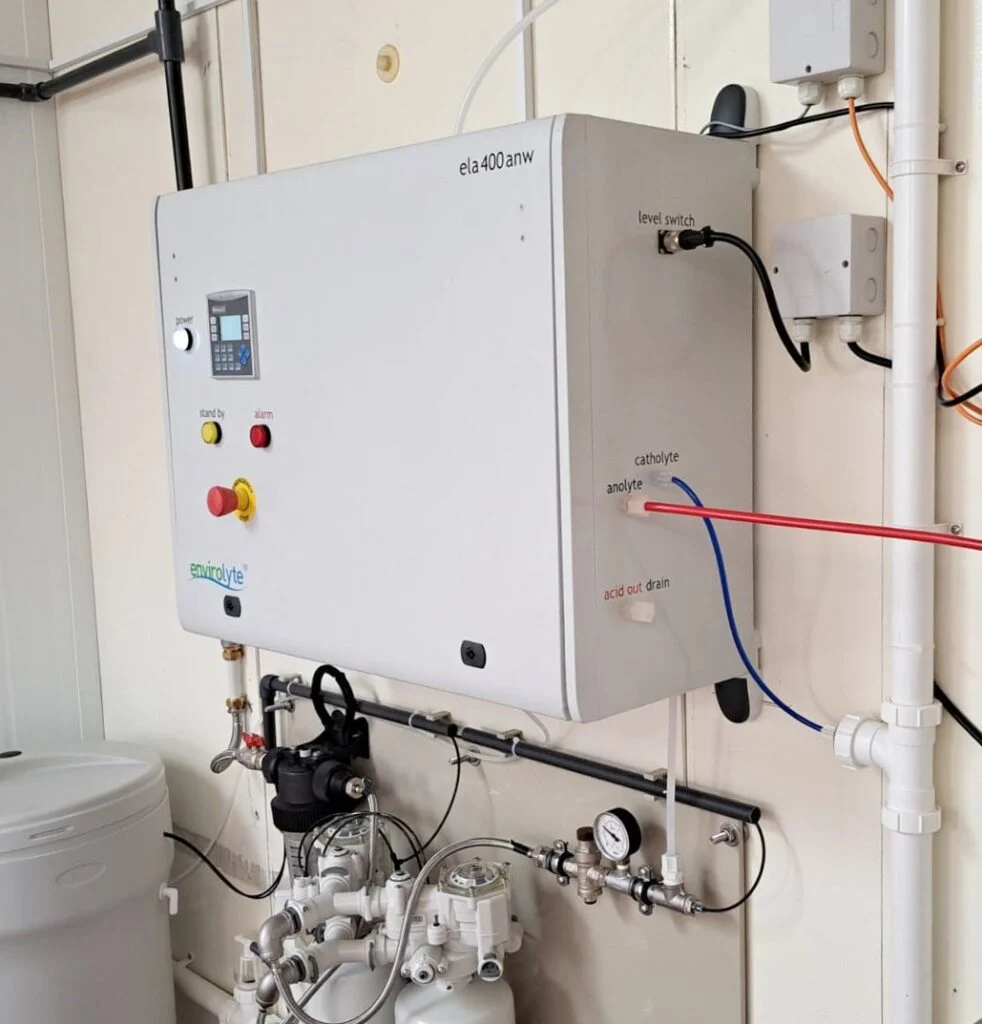
Installed Envirolyte ela400ANW anolyte generator for on-site neutral anolyte production
Installed Envirolyte ela400ANW anolyte generator for on-site neutral anolyte production.

Key Differences Between ANW and Standard ELA Generators
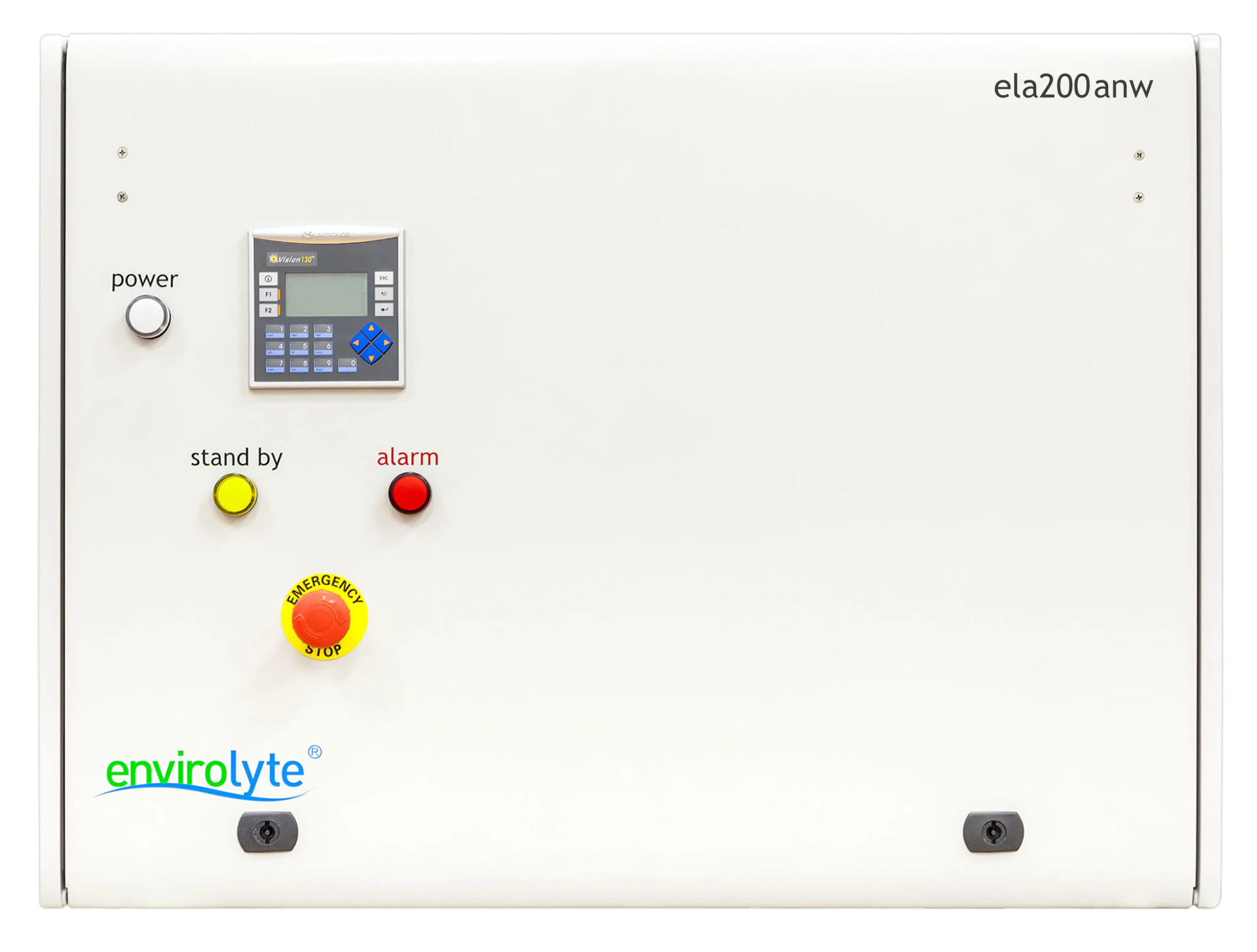
ANW anolyte generator operating differences
ParameterANW generator specificationApplication relevance
Salt consumptionApproximately 1.2–1.5 g NaCl per 1 L of 500 ppm HClO / HOCl solution.Supports low-salt operation and reduced chloride residue in treated water.
Energy consumptionAbout 4 W per 1 L of anolyte at approximately 500 ppm FAC, depending on model and operating conditions.Useful for large water treatment and continuous dosing applications.
Standard pHGenerally pH ~7–7.5, depending on source water.Supports neutral anolyte applications where low corrosivity and process compatibility matter.
Optional pH regulationOptional pH regulation in the range of approximately pH 2.5–7.5 can be specified when ordering.Allows the system to be configured for specific disinfection, water treatment or process requirements.
Catholyte productionANW machines do not produce catholyte as a commercially viable side product; catholyte flow is approximately 0.4% of total flow.If a process requires useful catholyte output, consider a standard ELA generator or a dedicated CG catholyte generator.

How ANW Anolyte Generators Work

ANW systems use electrochemical activation technology to convert a dilute NaCl solution into an active oxidizing anolyte stream. The generated solution contains free available chlorine species, predominantly hypochlorous acid under suitable pH conditions, and is produced on site close to the point of use.

For technical background, see electrochemical activation and electrolysed water technology, diaphragmatic electrolysis cells and electrolysed water solutions.

When to Choose ANW Instead of ELA

ANW generators should be considered when the project requires neutral anolyte, lower salt consumption, lower energy consumption and reduced chloride residue. This can be important for continuous water disinfection, cooling tower treatment, corrosion-sensitive installations, healthcare water systems and industrial hygiene processes.

If your application requires a significant catholyte stream for alkaline washing or cleaning support, Envirolyte recommends evaluating a standard ELA anolyte generator or a dedicated CG catholyte generator.

Typical Applications

Typical ANW generator applications and related Envirolyte pages
Application areaWhy ANW is relevantRecommended page
Municipal and process water disinfectionLow-salt neutral anolyte for controlled dosing into water systems.Water disinfection systems
Legionella risk managementContinuous treatment support for hot and cold water systems where dosing control and low residue are important.Legionella prevention
Cooling towers and cooling waterBiofilm, algae and microbial control support with reduced chloride input and reduced corrosion risk.Cooling towers
Healthcare and public buildingsOn-site generation of neutral anolyte for water hygiene programmes and controlled disinfection workflows.Healthcare water hygiene and Legionella control
Food processing and industrial hygieneProcess hygiene support where water quality, residue, contact time and material compatibility must be evaluated.Food processing
Industrial applicationsWater treatment, process hygiene and microbial control applications where lower salt residue is preferred.Industrial applications

ANW Generator Model Range

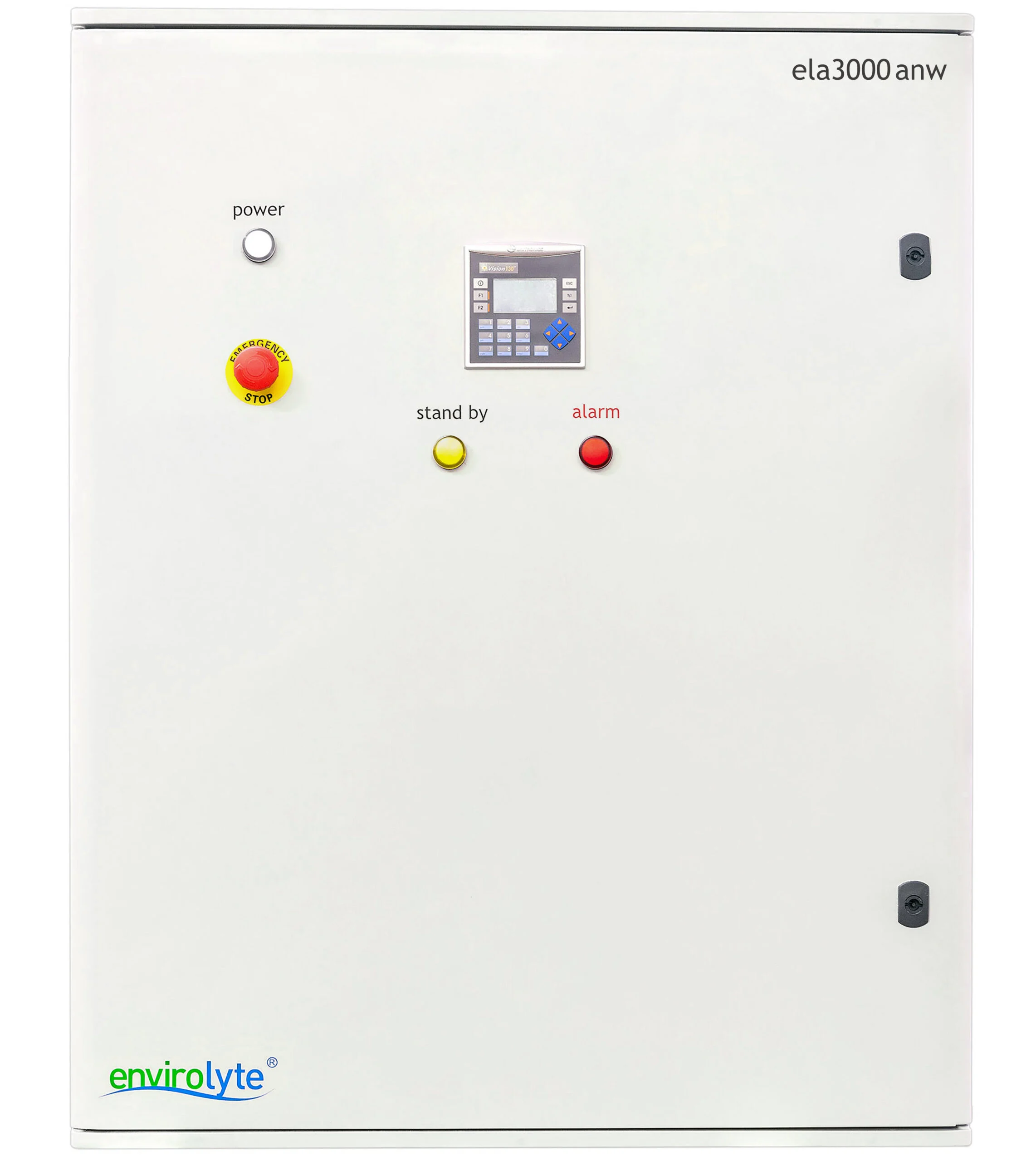
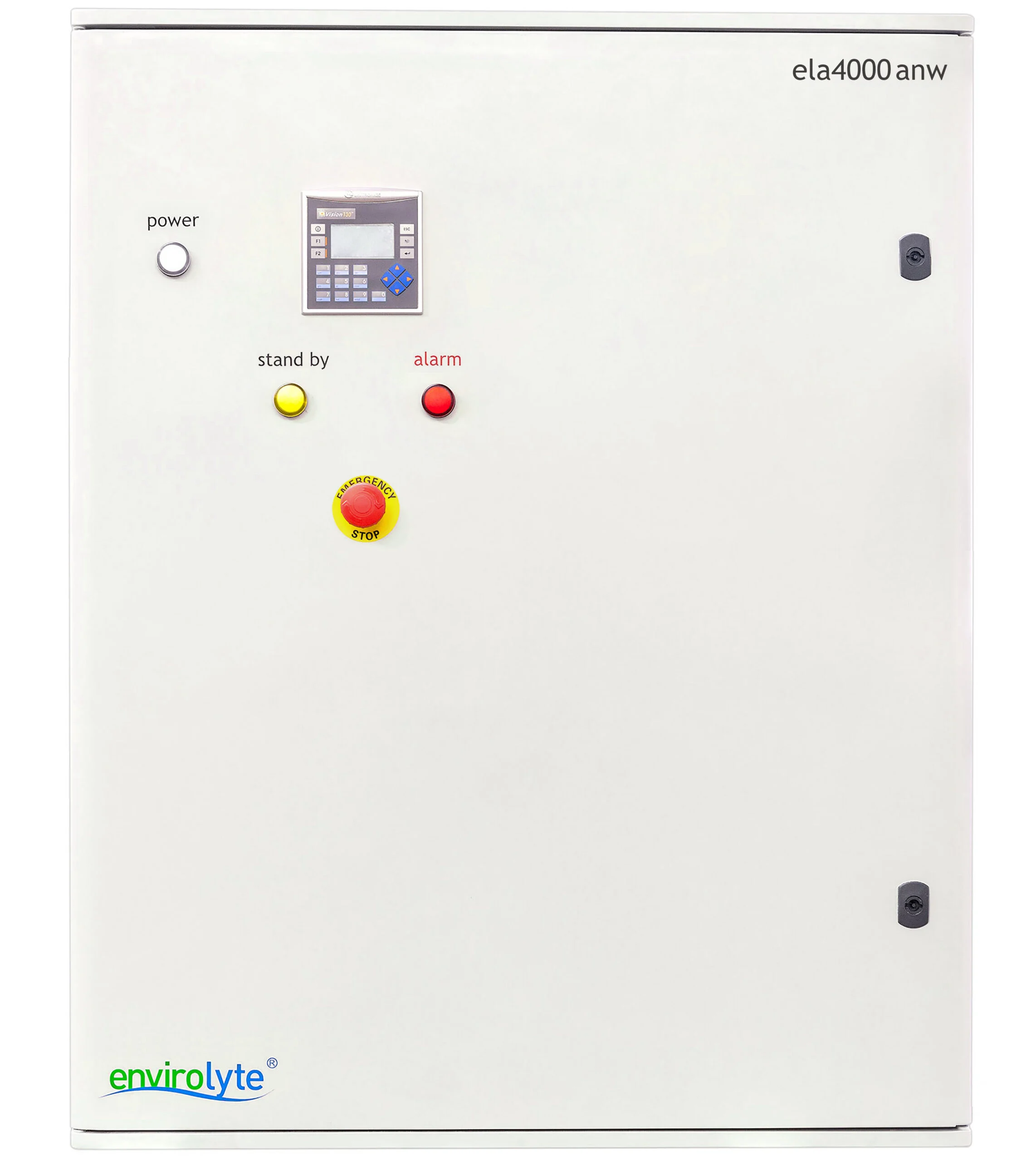
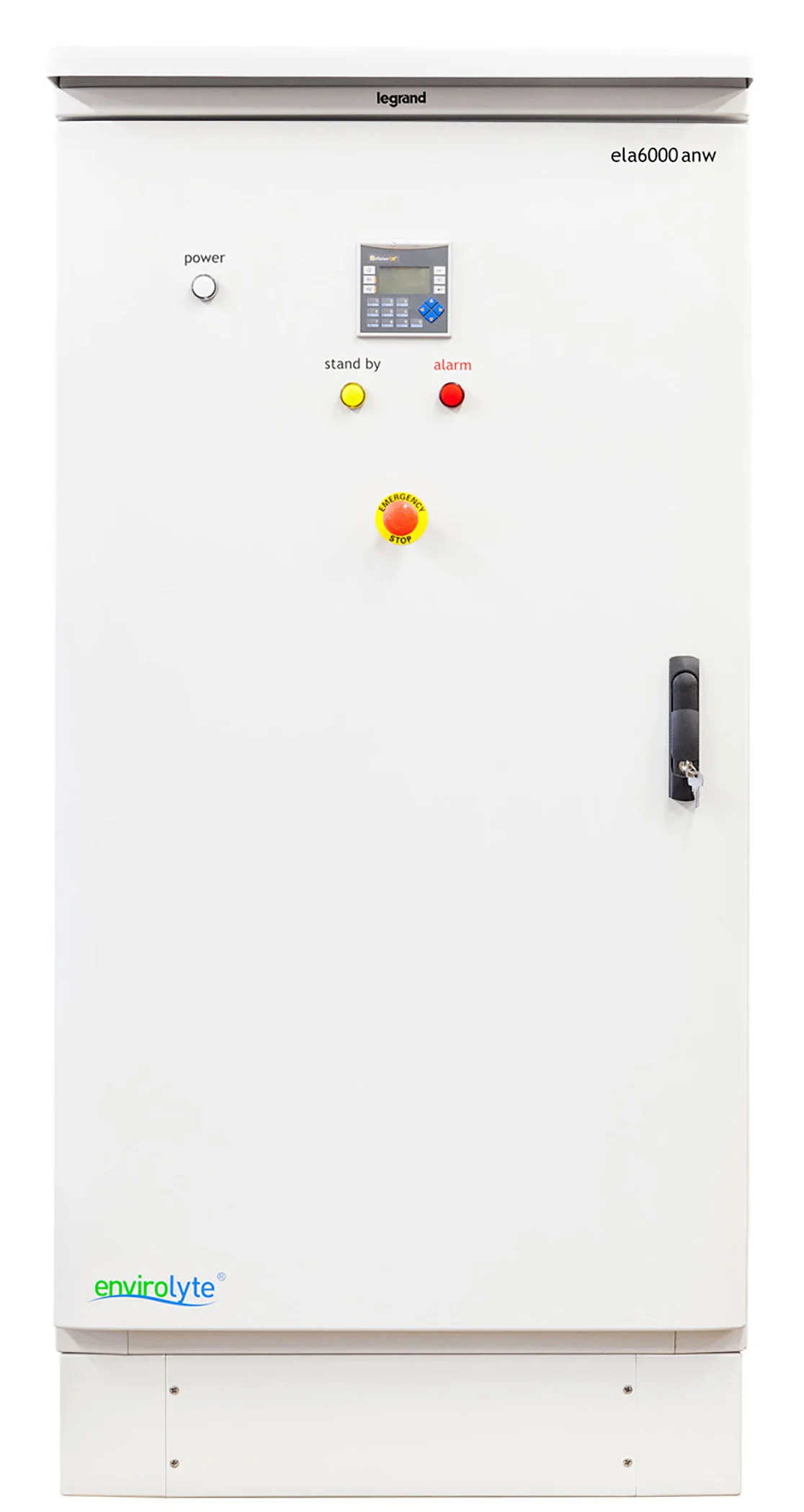
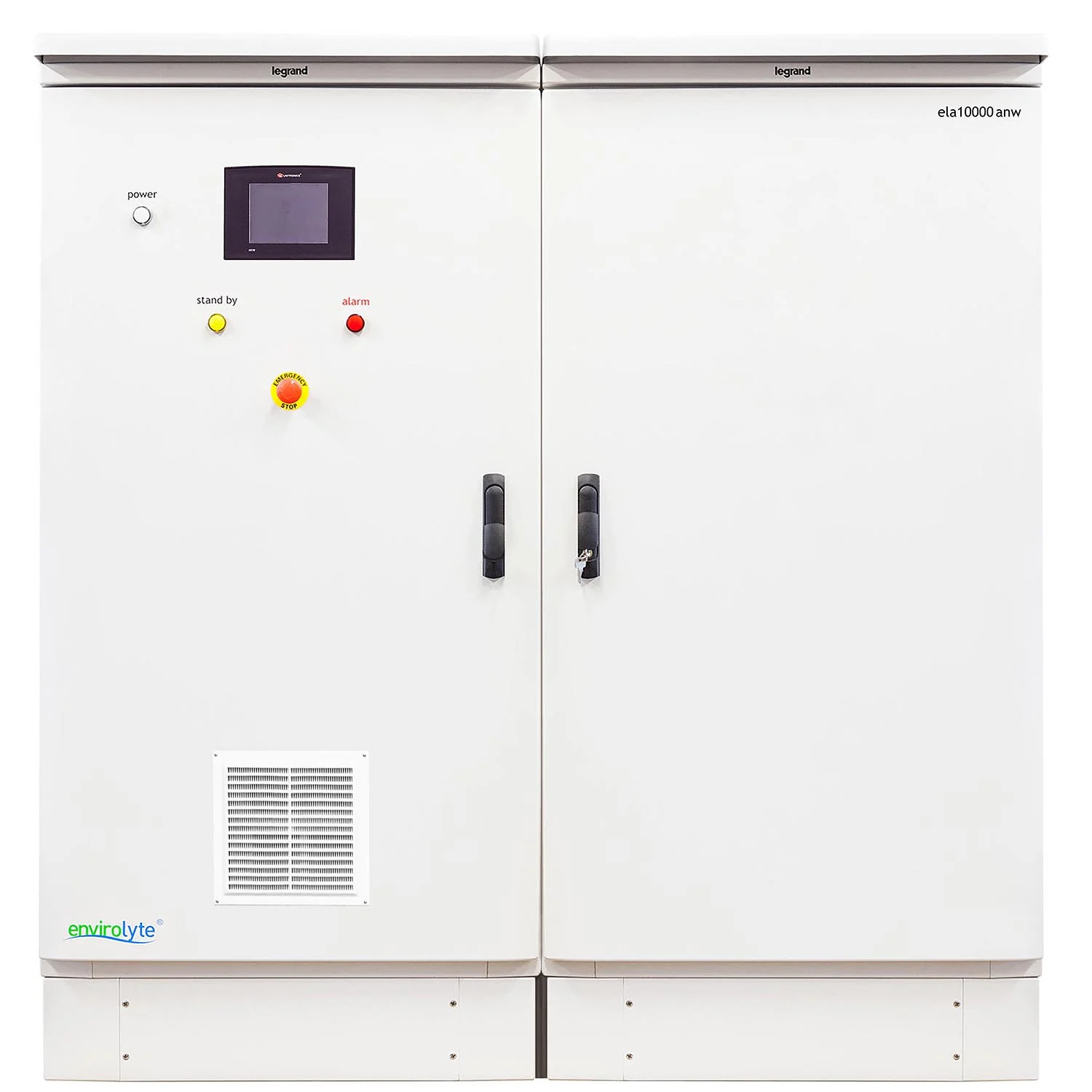
The ANW range includes wall-mounted and floor-standing generators. Model selection should be based on required output capacity, target FAC concentration, water quality, pH requirement, dosing method, storage volume, monitoring system, installation space and applicable local regulations.

ANW model overview with technical data sheets
ModelTypical output at ~500 ppm FACConfigurationTechnical data sheet
ela200ANW~20 LPHWall-mountedPDF technical description
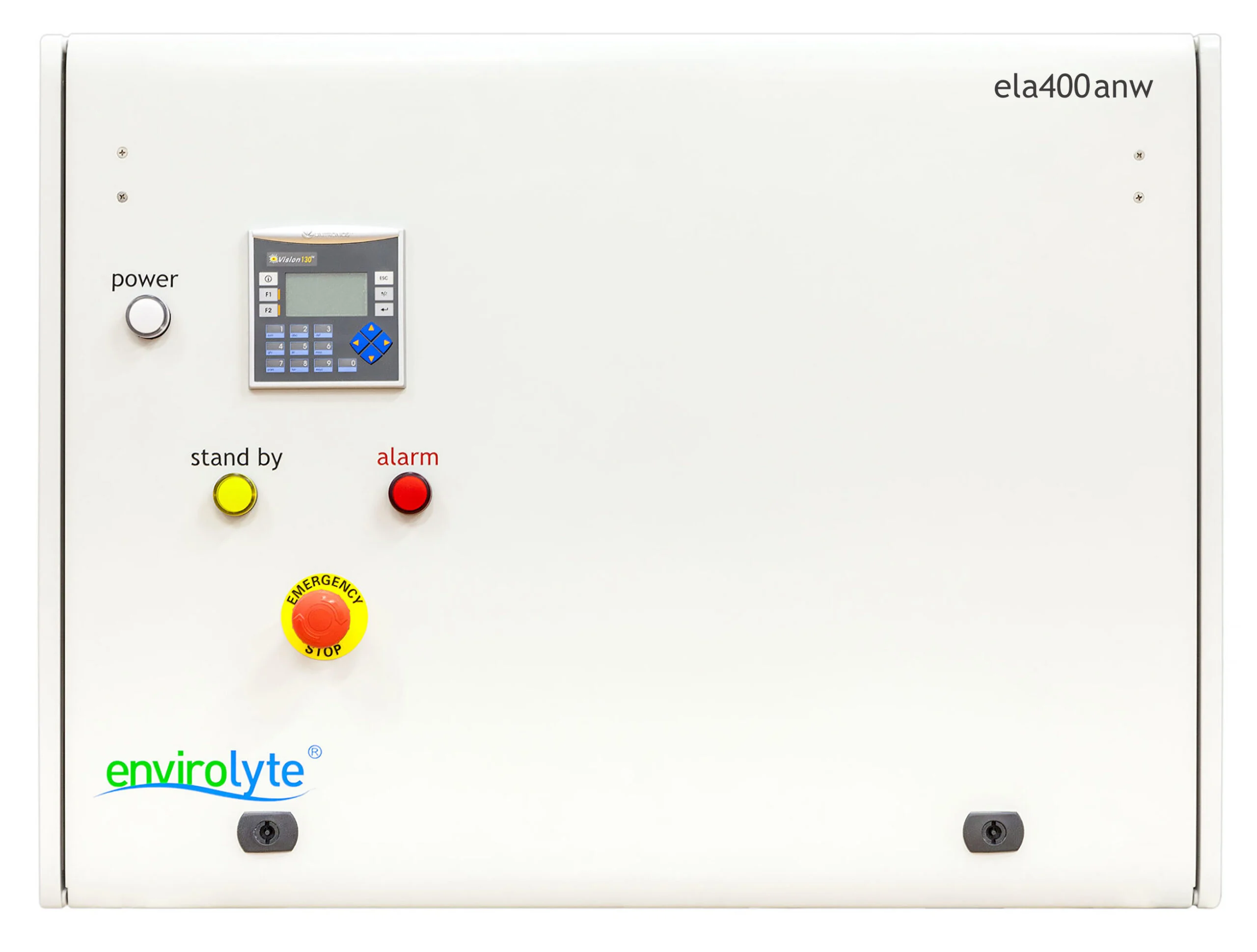
ela400ANW~40 LPHWall-mountedPDF technical description
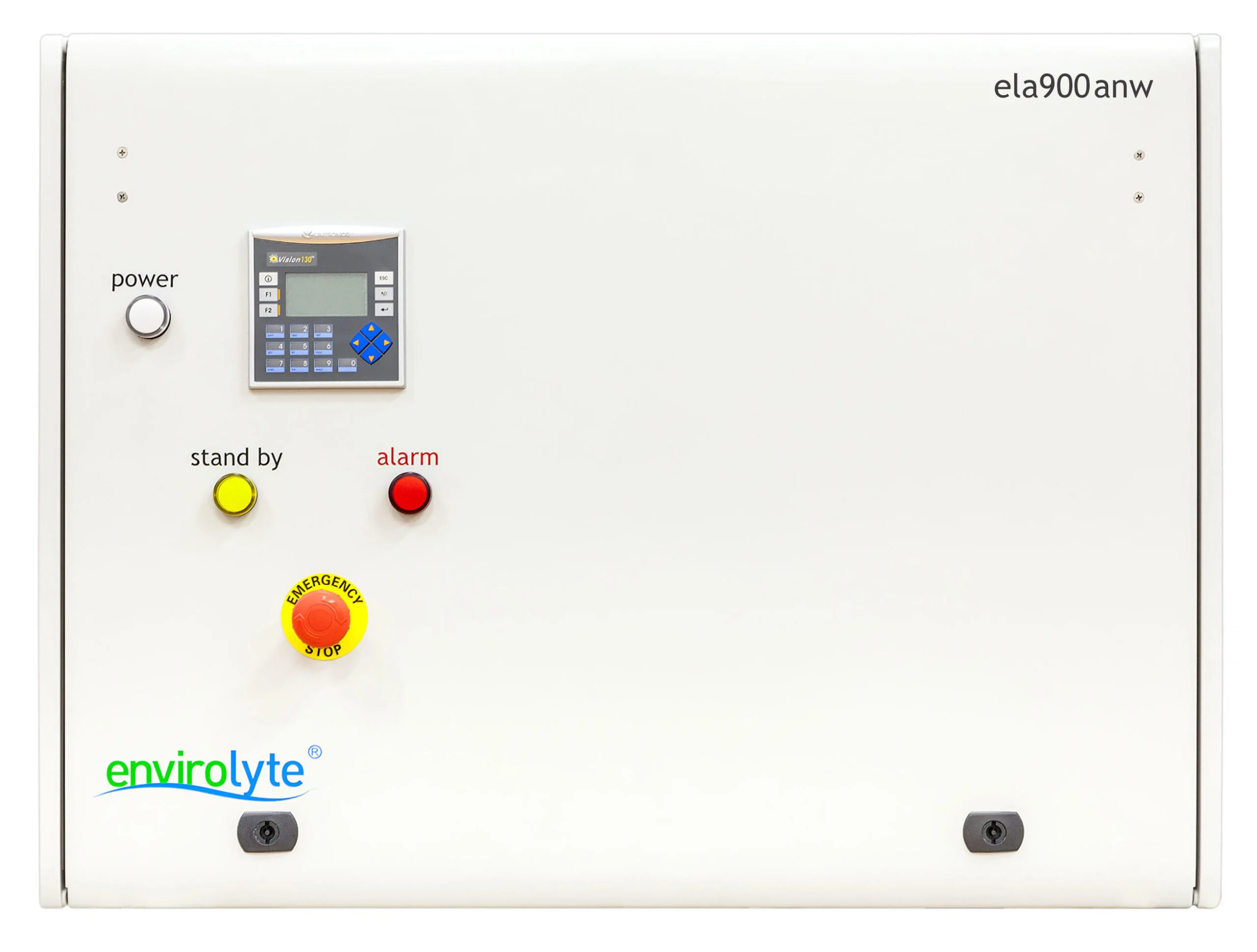
ela900ANW~90 LPHWall-mountedPDF technical description
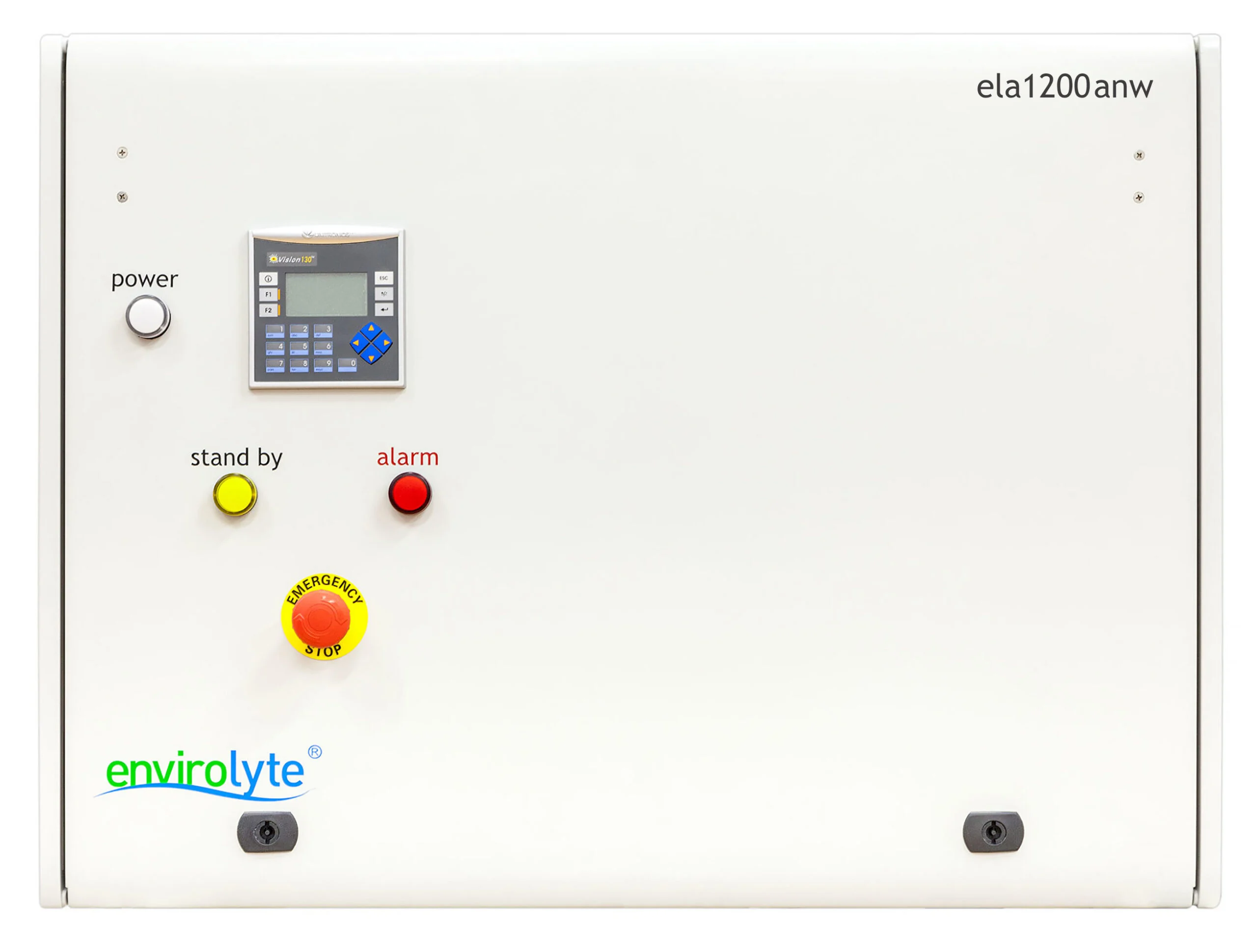
ela1200ANW~120 LPHWall-mountedPDF technical description
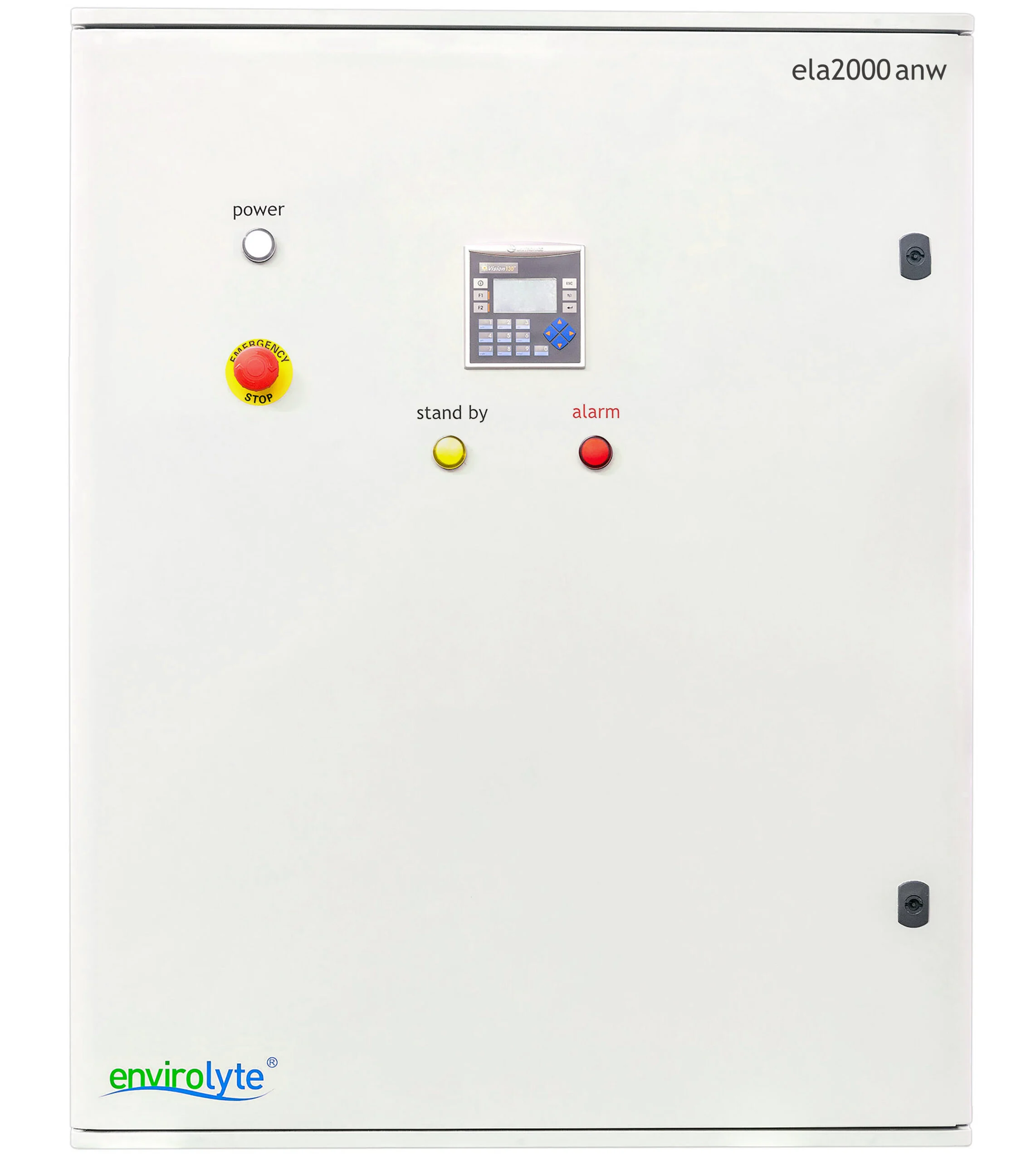
ela2000ANW~200 LPHWall-mountedPDF technical description
ela3000ANW~300 LPHWall-mountedPDF technical description
ela4000ANW~400 LPHWall-mountedPDF technical description
ela6000ANW~600 LPHFloor-standingPDF technical description
ela10000ANW~1000 LPHFloor-standingPDF technical description
ela12000ANW~1200 LPHFloor-standingPDF technical description
ela18000ANW~1800 LPHFloor-standingPDF technical description
ela20000ANW~2000 LPHFloor-standingPDF technical description
ela24000ANW~2400 LPHFloor-standingPDF technical description
ela30000ANW~3000 LPHFloor-standingPDF technical description
ela40000ANW~4000 LPHFloor-standingPDF technical description
ela50000ANWProject-specific high-capacity configurationFloor-standingTechnical data on request
ela60000ANWProject-specific high-capacity configurationFloor-standingTechnical data on request

Wall-Mounted ANW Generators

Floor-Standing ANW Generators

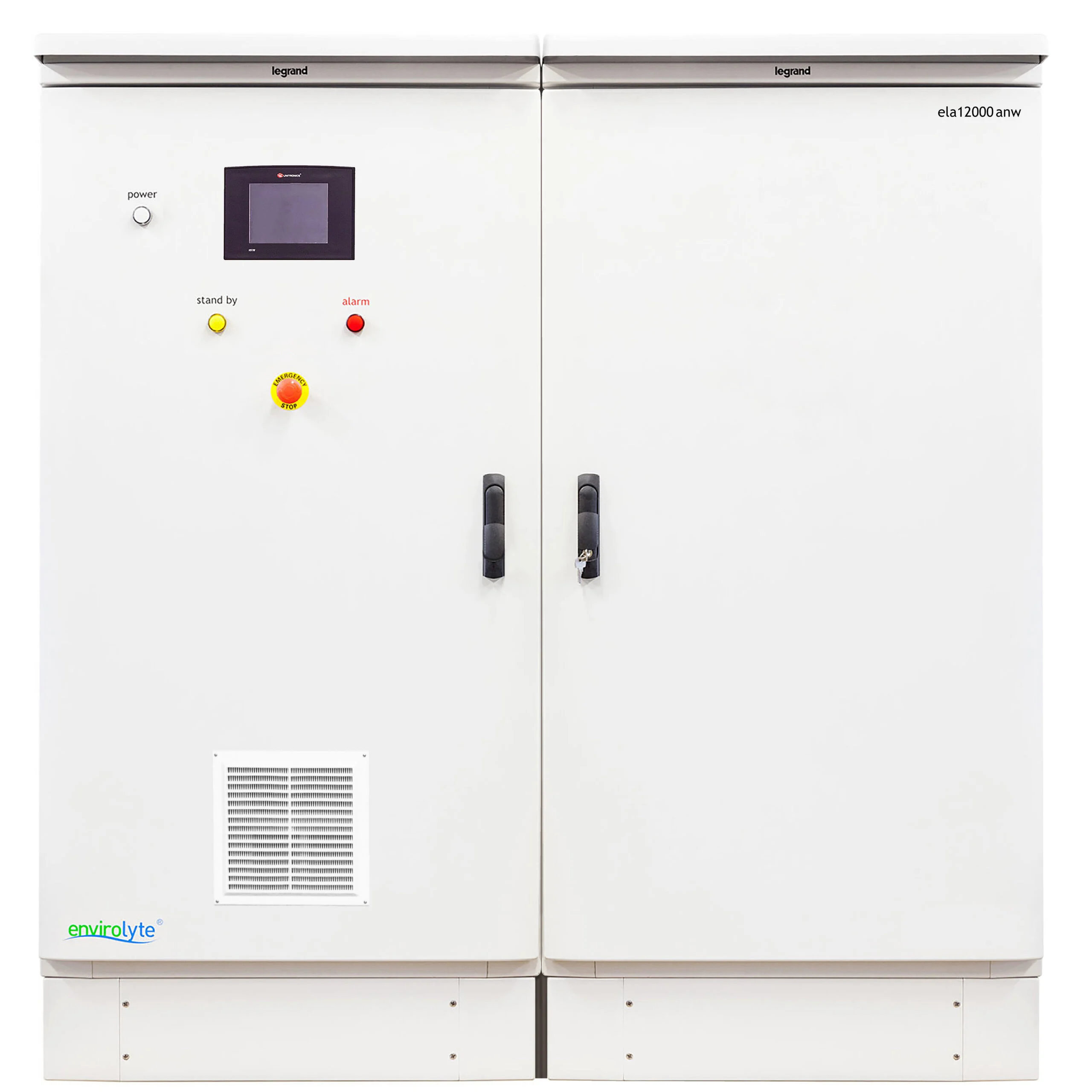
ela10000ANW

Envirolyte ELA-10000ANW anolyte generator

ela12000ANW

Envirolyte ELA-12000ANW anolyte generator

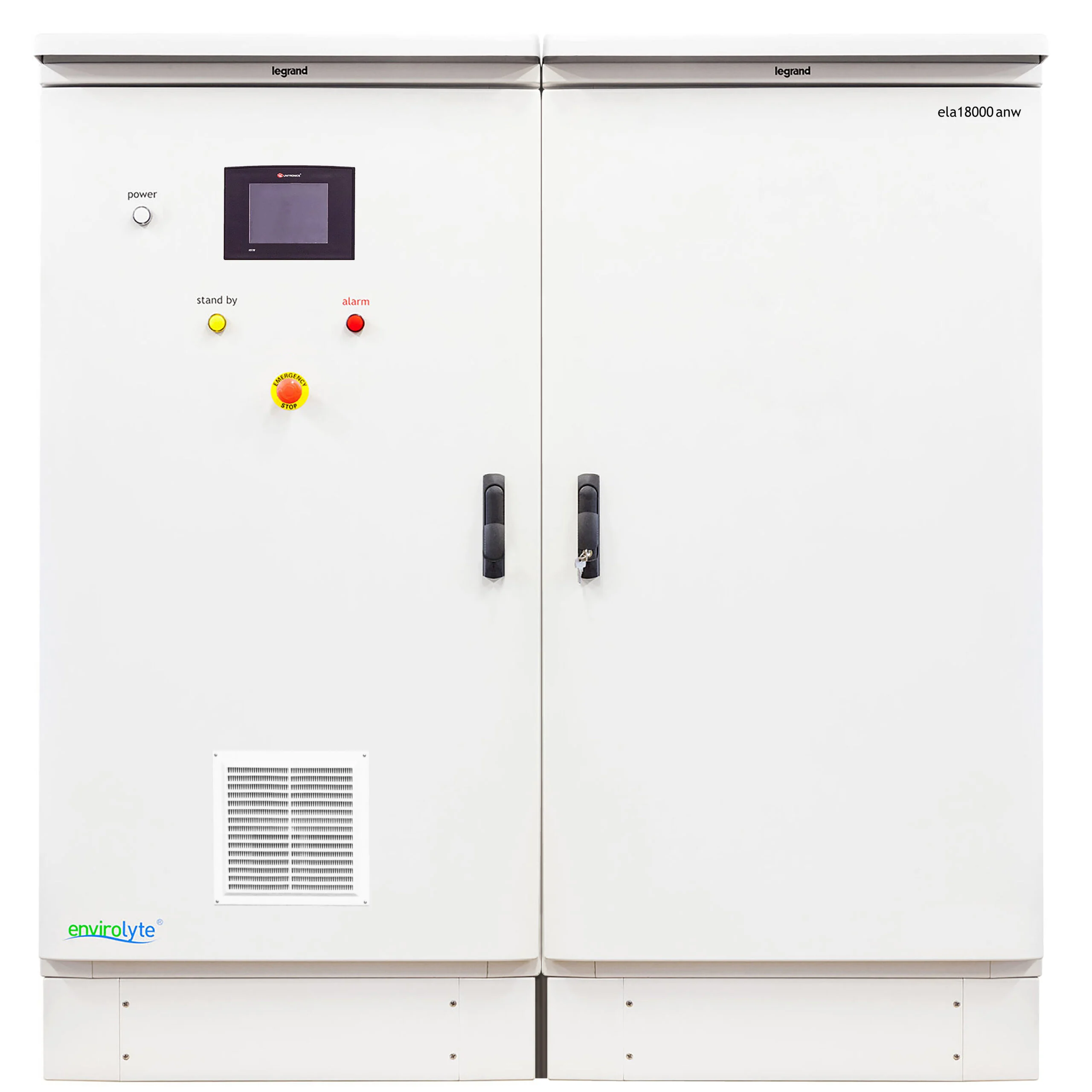
ela18000ANW

Envirolyte ELA-18000ANW anolyte generator

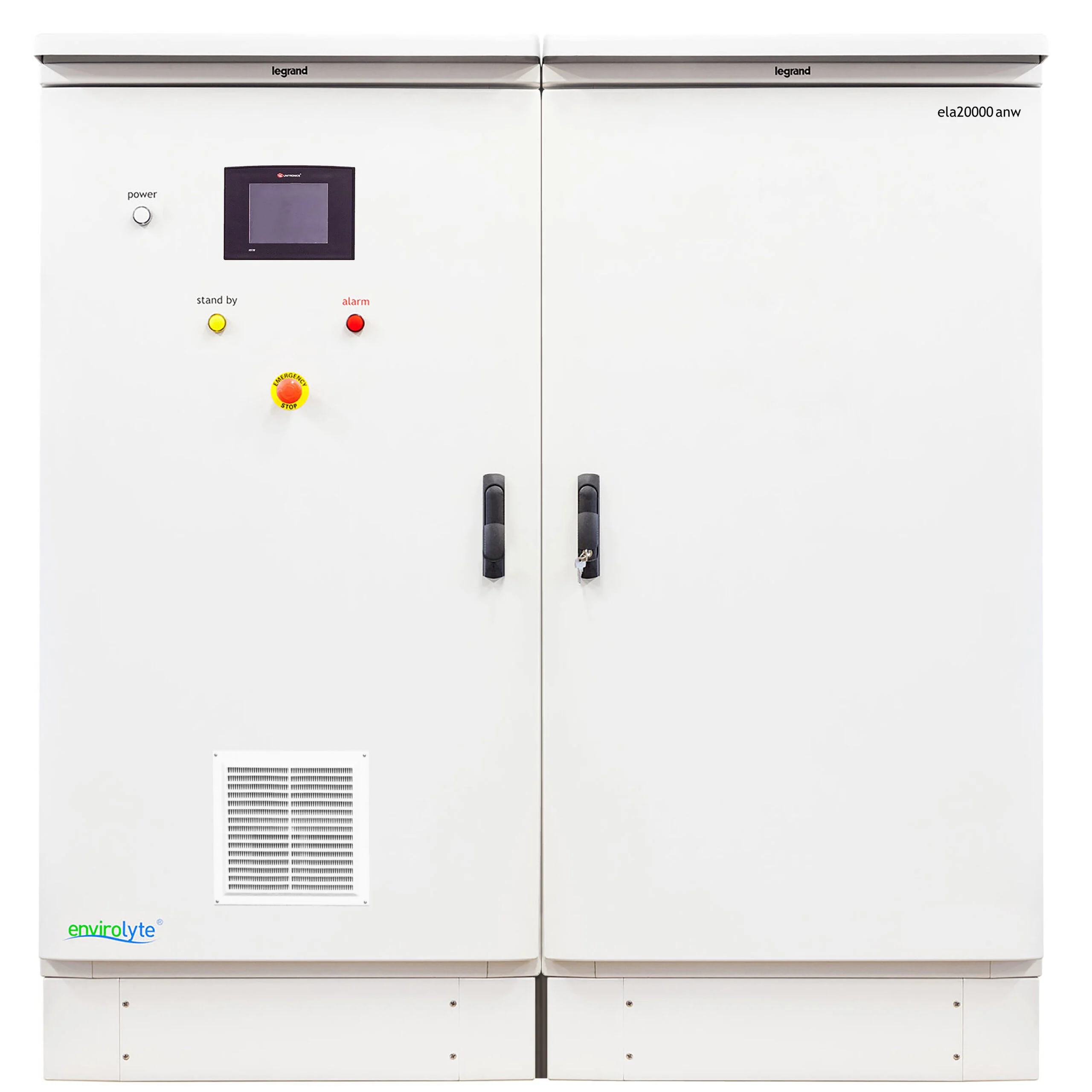
ela20000ANW

Envirolyte ELA-20000ANW anolyte generator

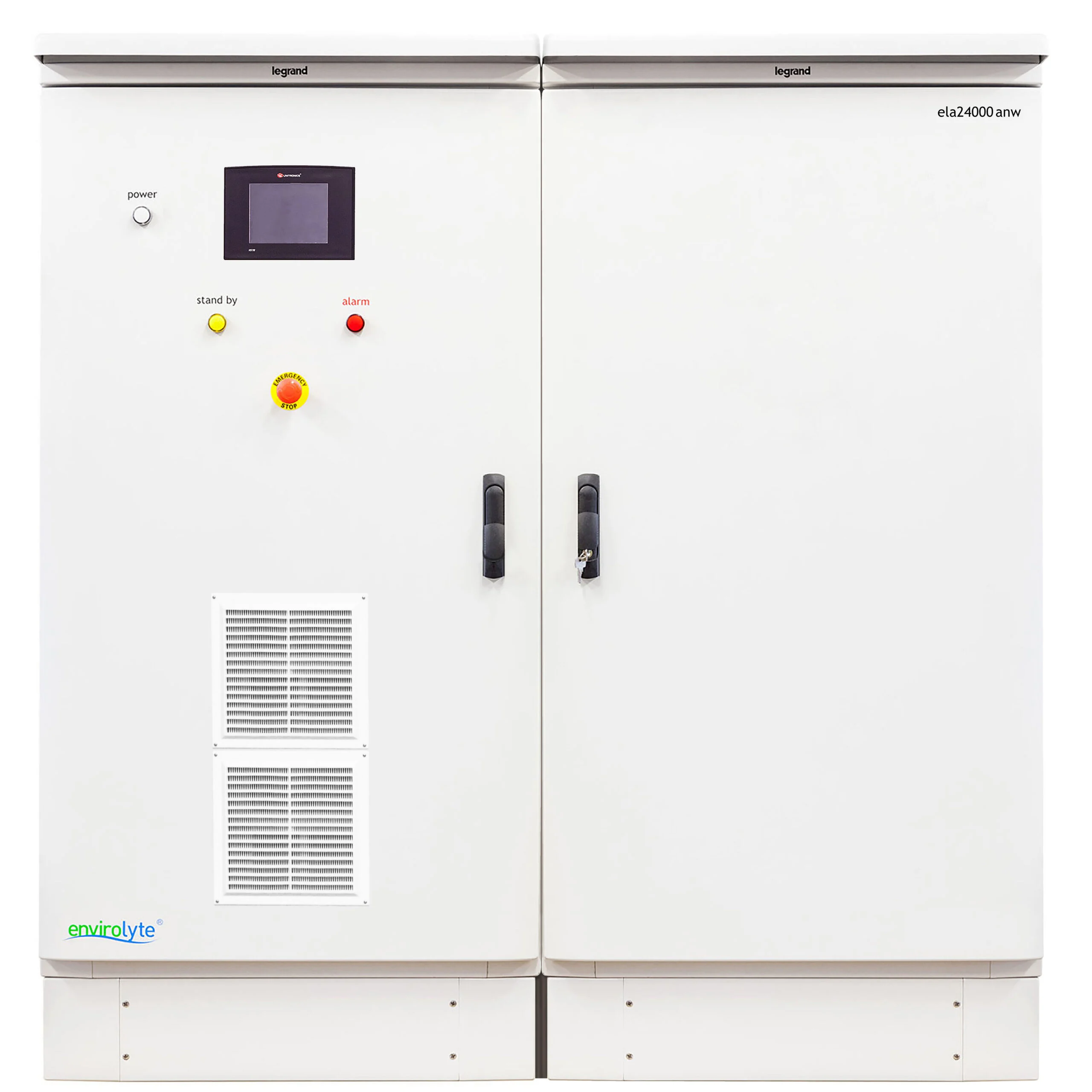
ela24000ANW

Envirolyte ELA-24000ANW anolyte generator

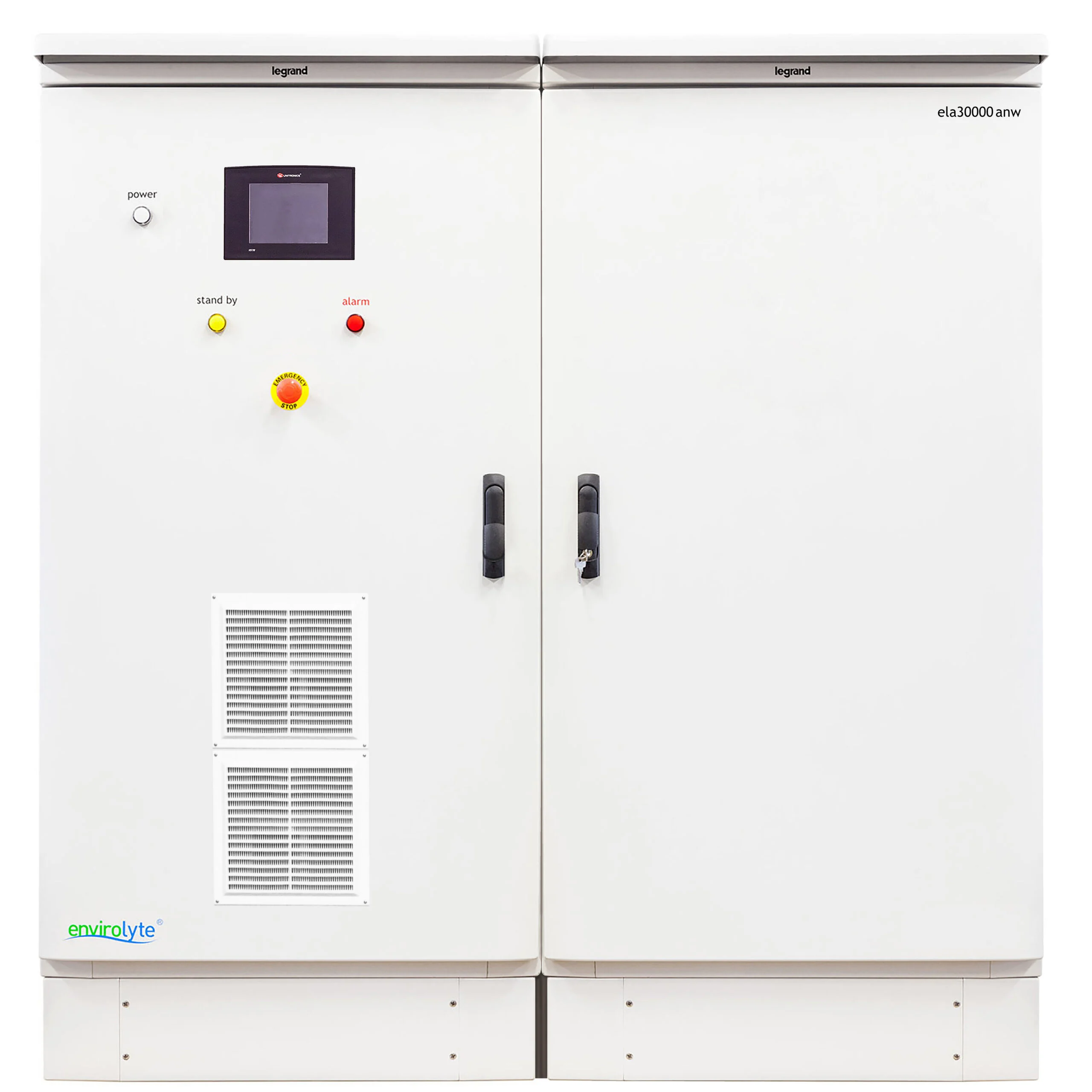
ela30000ANW

Envirolyte ELA-30000ANW anolyte generator

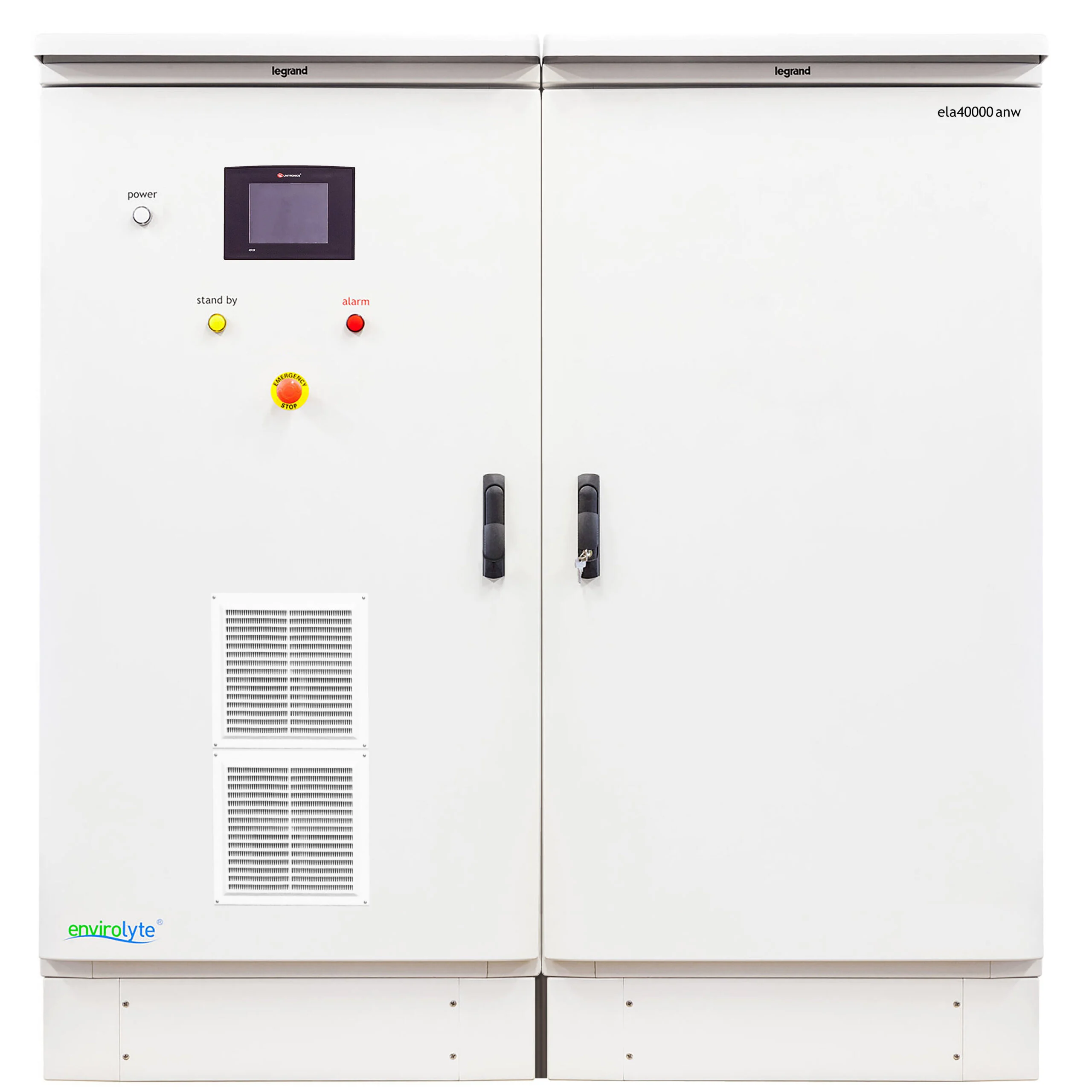
ela40000ANW

Envirolyte ELA-40000ANW anolyte generator

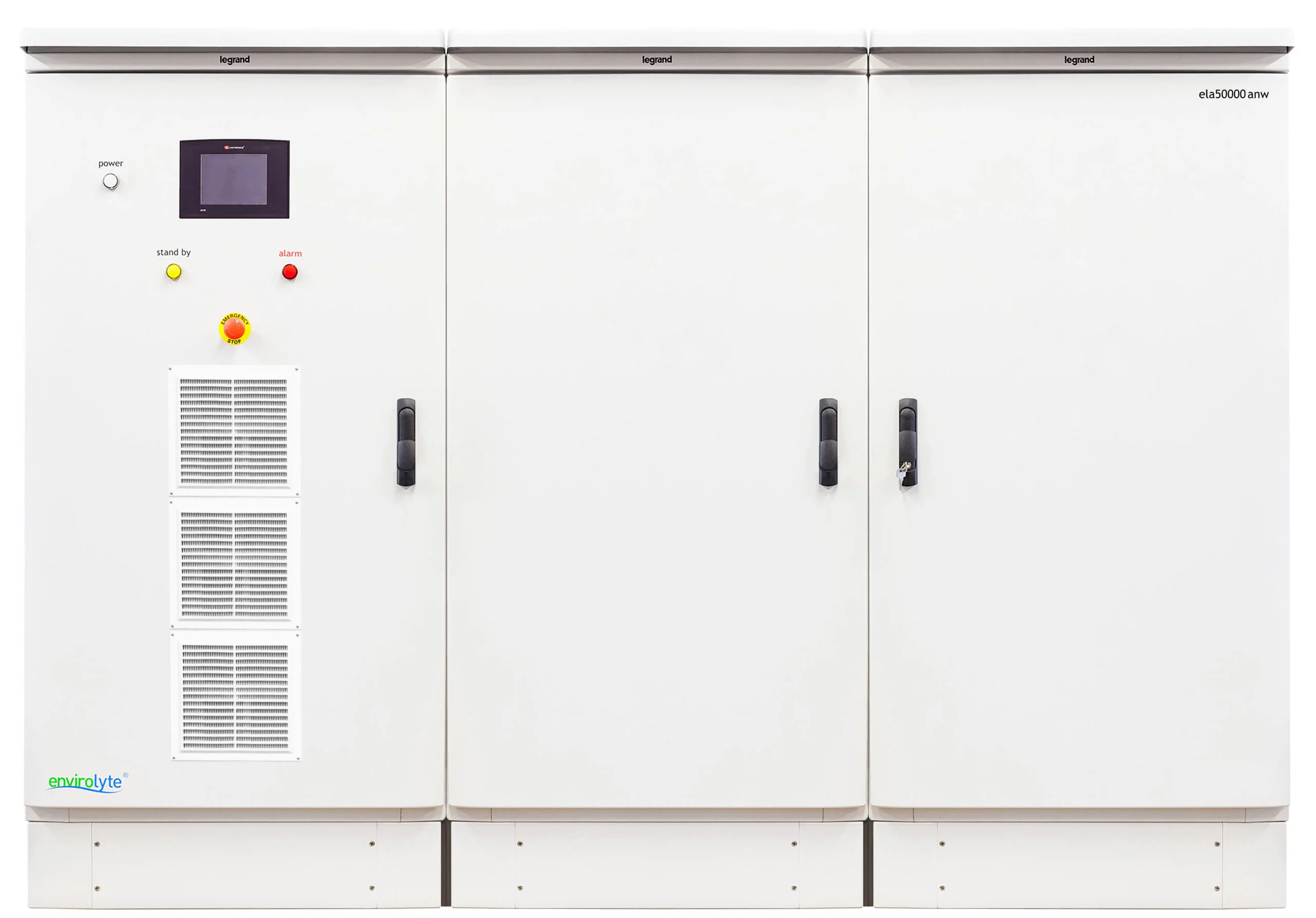
ela50000ANW

Envirolyte ELA-50000ANW anolyte generator

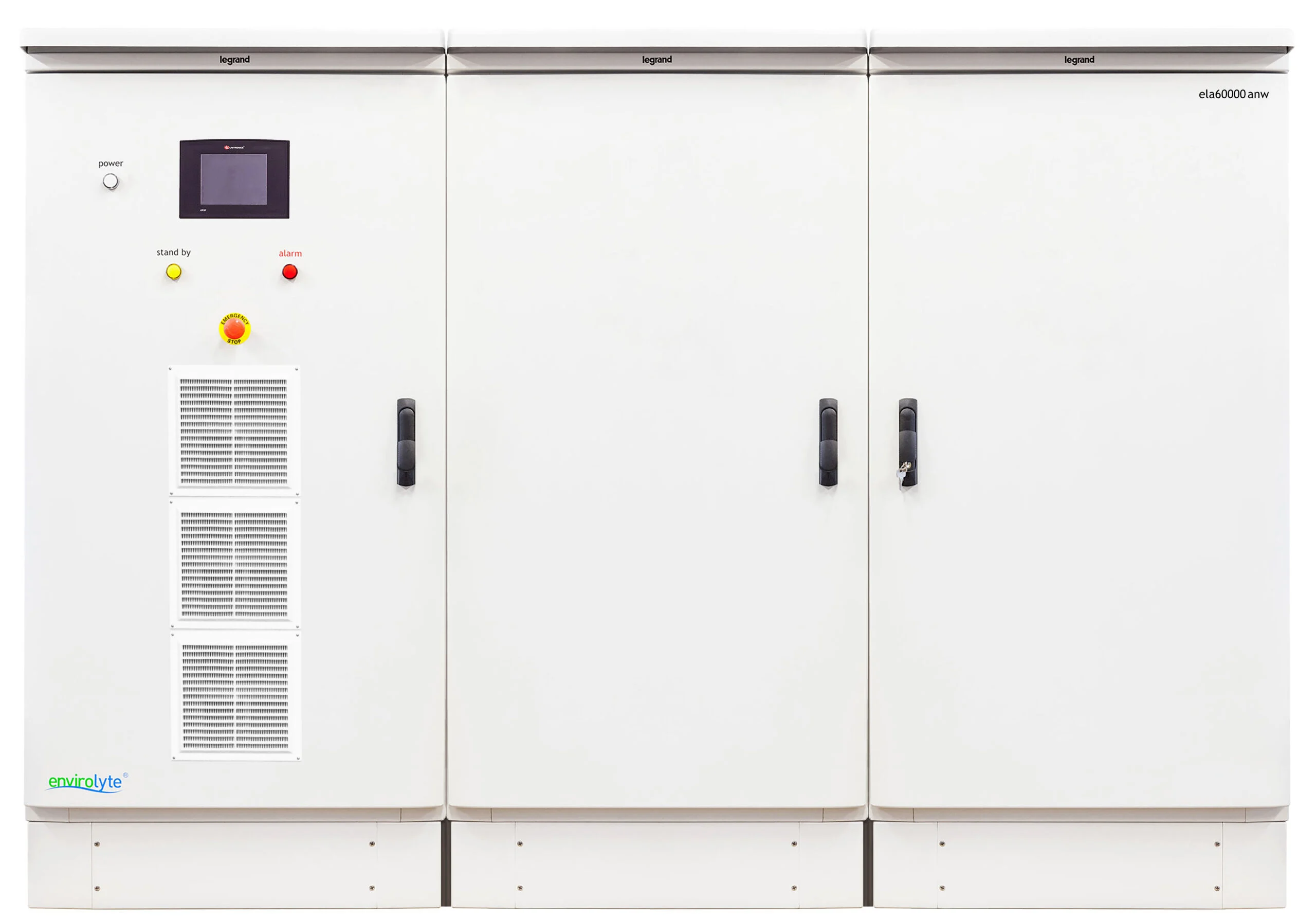
ela60000ANW

Envirolyte ELA-60000ANW anolyte generator

Technical Features

  • On-site production of ANK neutral anolyte with approximately 500 ppm FAC.
  • Standard pH around 7–7.5, depending on source water.
  • Optional pH correction in the range of approximately pH 2.5–7.5 when specified at order stage.
  • Lower NaCl consumption compared with standard ELA machines.
  • Reduced catholyte flow compared with standard anolyte generators.
  • Automated flushing, acid pump, brine pump, input valve, flow and pressure controls, and temperature switches on cells according to model configuration.
  • Remote control options through Ethernet, Modbus TCP/IP or GSM are available for selected configurations.
  • Inline pH sensor, inline ORP sensor and non-contact level sensor options are available depending on project requirements.

Testing, Compliance and Project Evaluation

For engineering evaluation, Envirolyte provides supporting information on microbiological testing, by-products testing, Legionella prevention evidence, product comparison, quality control and regulatory context. These materials help customers evaluate whether ANW anolyte generation is suitable for a specific water treatment or sanitation programme.

Frequently Asked Questions

What is an ANW anolyte generator?

An ANW anolyte generator is an Envirolyte on-site generator designed to produce neutral HOCl-rich anolyte with lower salt and energy consumption compared with standard ELA anolyte generators.

What does ANW anolyte contain?

ANW anolyte is an electrochemically activated oxidizing solution containing free available chlorine species. Under suitable pH conditions, hypochlorous acid is the key active species responsible for disinfection performance.

What is the standard pH of ANW anolyte?

The standard ANW specification is generally around pH 7–7.5, depending on source water. Optional pH regulation in the range of approximately pH 2.5–7.5 can be specified when ordering.

Does an ANW generator produce catholyte?

ANW generators do not produce catholyte as a commercially viable side product. The catholyte flow is approximately 0.4% of total flow and is normally not selected when useful catholyte production is required.

When should I choose ANW instead of ELA?

Choose ANW when low salt consumption, low chloride residue, neutral anolyte and reduced corrosion risk are more important than catholyte production. Choose ELA or a dedicated CG catholyte generator if your application requires a significant alkaline catholyte stream.

Request ANW Generator Selection Support

For application guidance, technical data, installation requirements or model selection, send your enquiry to Envirolyte Industries International Ltd. Envirolyte can help evaluate water quality, required output, FAC concentration, pH range, dosing method, monitoring system and the most suitable generator configuration.

  • Products
  • Technology
  • Performance
  • Applications