
Envirolyte poultry farm water treatment and biosecurity systems generate anolyte on site for controlled use in drinking-water lines, poultry houses, hatchery support areas, equipment-sanitation processes and between-flock cleaning programmes.
Anolyte is generated from conditioned water, sodium chloride and electricity and contains free available chlorine species, including hypochlorous acid under suitable operating conditions. Concentration, pH, dosing rate, application volume and contact time must be selected for the specific poultry process and validated under actual farm conditions.
Envirolyte equipment should support, not replace, physical cleaning, veterinary oversight, flock management and established biosecurity procedures. Learn about electrochemical activation technology, review the broader farming and livestock applications, and check the applicable ECHA and BPR information.
Poultry Hygiene as Part of Farm Biosecurity
Poultry biosecurity is intended to reduce the introduction and spread of infectious agents through birds, people, vehicles, equipment, litter, feed, water, insects, rodents and wild animals. A disinfectant is only one component of this programme. Before disinfection, poultry houses and equipment should be emptied where required and cleared of litter, manure, feathers, dust, feed and other organic material. Surfaces should then be cleaned, inspected and treated using an authorised disinfectant at the validated concentration, application volume and contact time. Further general guidance is available from the WOAH biosecurity procedures for poultry production and the USDA poultry enclosure cleaning and disinfection checklist.Existing Poultry Farm Installations
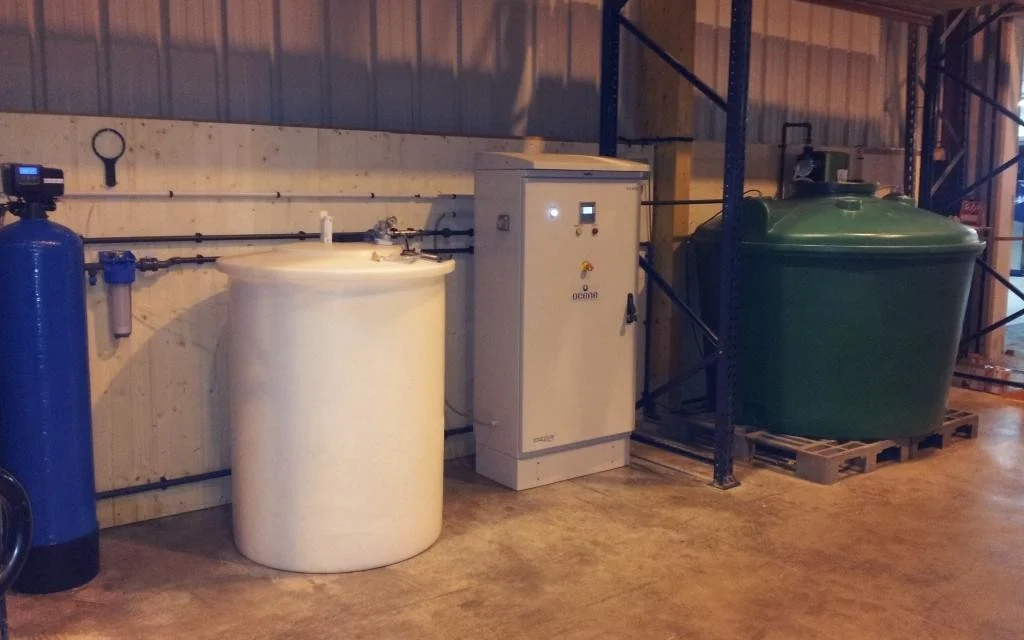
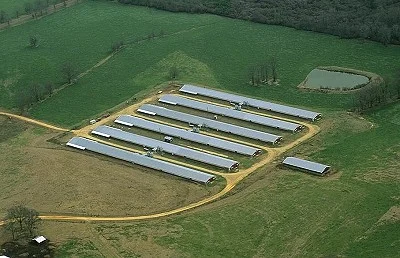
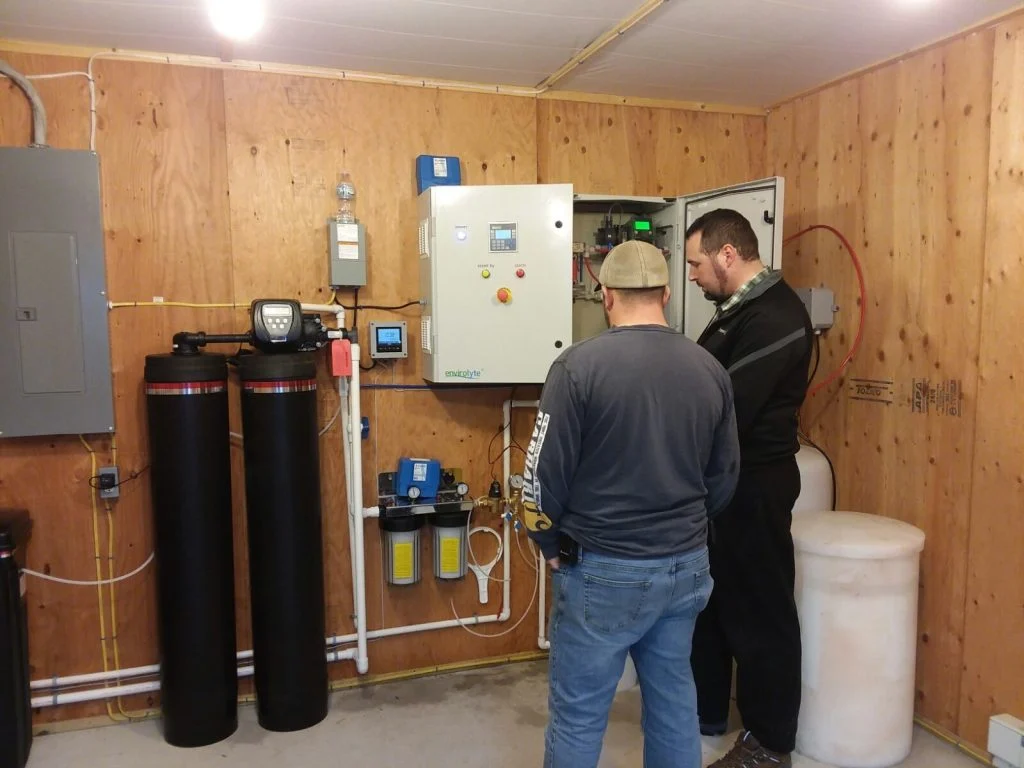
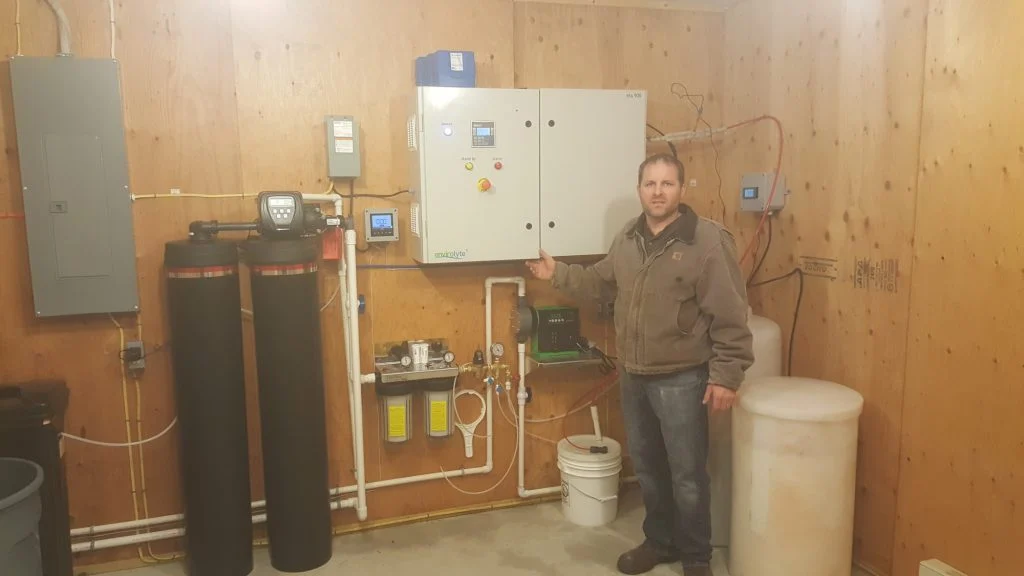
The following photographs show poultry farms, Envirolyte equipment and installation work. Equipment models and project configurations should be confirmed before they are reused in current specifications or tenders.
Potential Poultry Farm Applications
The technical and regulatory requirements differ between drinking-water treatment, poultry-house disinfection, hatchery hygiene and food- or feed-contact applications. Each process should therefore have its own operating specification.Scroll horizontally to view the complete table.
| Application area | Potential role | Important requirements |
|---|---|---|
| Poultry drinking water | Controlled treatment of suitable source water, storage tanks, header tanks, distribution pipes and nipple-drinker lines. | Water analysis, bird type and age, peak demand, line design, biofilm condition, dosing method, permitted residual, materials compatibility and routine water-quality verification. |
| Waterline sanitation between flocks | Circulation or controlled filling of compatible drinking-water lines as part of a validated cleaning programme. | Line cleaning, removal of deposits, solution concentration, complete line filling, contact time, flushing requirements and verification before birds return. |
| Poultry-house surfaces | Disinfection of cleaned floors, walls, ceilings, partitions and other compatible environmental surfaces. | Removal of litter and organic material, washing, inspection, complete coverage, wet contact time, drying, ventilation and re-entry procedure. |
| Hatchery support areas | Sanitation of selected cleaned rooms, floors, trays, trolleys and compatible non-critical equipment. | Hatchery hygiene plan, equipment compatibility, separation of clean and dirty flows, authorised concentration and prevention of recontamination. |
| Transport crates and vehicles | Sanitation of cleaned crates, modules, wheels, loading areas and selected vehicle surfaces. | Removal of feathers, litter and manure, adequate drainage, complete coverage, runoff control, contact time and separation of clean equipment. |
| Tools, footwear and entry points | Controlled sanitation of cleaned tools, boots and selected equipment entering production areas. | Physical cleaning before dipping or spraying, correct concentration, replacement frequency, protection from dilution and documented entry procedures. |
| Feed handling and storage equipment | Hygiene support for compatible conveyors, bins, mixers and storage areas. | Feed-contact approval, moisture and water-activity limits, application volume, complete drying and prevention of post-treatment contamination. See feed material decontamination. |
| Fogging or misting | Supplementary treatment of suitable enclosed areas where the application method is authorised and technically justified. | Risk assessment, droplet size, concentration, room volume, ventilation, exposure control, compatibility and confirmation of whether birds or personnel must be absent. |
How an Envirolyte Poultry Farm System Works
A complete poultry-farm installation may combine an Envirolyte generator with source-water preparation, brine supply, solution storage, dosing pumps, spraying or circulation equipment and automated monitoring.- Application assessment: define whether the project concerns drinking water, line sanitation, poultry housing, hatchery support, transport equipment or another authorised use.
- Water analysis: evaluate hardness, pH, conductivity, turbidity, temperature, organic demand and microbiological quality.
- Water preparation: install filtration, pressure regulation or softening where required by the selected generator.
- Brine preparation: prepare and monitor the sodium chloride solution used by the generator.
- On-site generation: produce anolyte under controlled hydraulic, electrical and solution-quality conditions.
- Storage or direct supply: transfer the solution to a compatible tank or directly to a controlled treatment system.
- Controlled dosing or application: meter, circulate or spray the solution at the validated concentration and application rate.
- Monitoring: check generated-solution parameters, dosing-pump output, drinking-water residual or other defined critical controls.
- Verification: record operating data and confirm performance through chemical, physical or microbiological testing where required.
Poultry Drinking-Water Treatment
Generator capacity should be selected using minimum, average and peak flock-water demand rather than only the number of birds. Water temperature, age of the flock, house climate, source-water quality, storage volume and line length can all affect demand. The treatment programme should define the injection point, mixing, target residual, sampling locations, alarm limits and corrective action. The free available chlorine concentration produced by the generator must not be confused with the permitted residual at the drinker.Waterline Cleaning and Biofilm Management
Continuous water treatment and between-flock line cleaning are different operations. Established deposits or biofilm may require a separate cleaning procedure, higher treatment concentration, longer contact time, mechanical action or use of compatible cleaners. After an intensive line treatment, the system should be flushed or returned to the validated drinking-water specification before birds are given access, unless the approved procedure explicitly states otherwise.Between-Flock Poultry-House Sanitation
A reliable procedure normally includes removal of birds and movable equipment, dry cleaning, litter removal, washing, detergent application where necessary, rinsing, inspection, disinfection, contact time, drying and protection against recontamination. Disinfectant should not be sprayed over heavy organic contamination and described as complete sanitation. Manure, litter, dust, feathers and feed residues can prevent adequate contact with the underlying surface.Fogging and Misting
Fogging should not automatically be recommended in occupied poultry houses. The product authorisation, aerosol exposure, ventilation, bird welfare, worker safety, equipment compatibility and local veterinary requirements must first be reviewed. Where fogging is authorised, it should supplement rather than replace cleaning of contaminated floors, walls, equipment and high-contact surfaces.Runoff and Environmental Control
On-site generation does not eliminate environmental responsibilities. Cleaning water, litter washings and disinfectant runoff should be collected or managed according to farm, wastewater and environmental requirements. Disinfectant should not be discharged uncontrolled near wells, drinking-water reservoirs, streams, ponds or other surface waters. Storage tanks, dosing equipment and wash areas should be protected against overflow and accidental release.Existing Poultry and Microbiological Illustrations
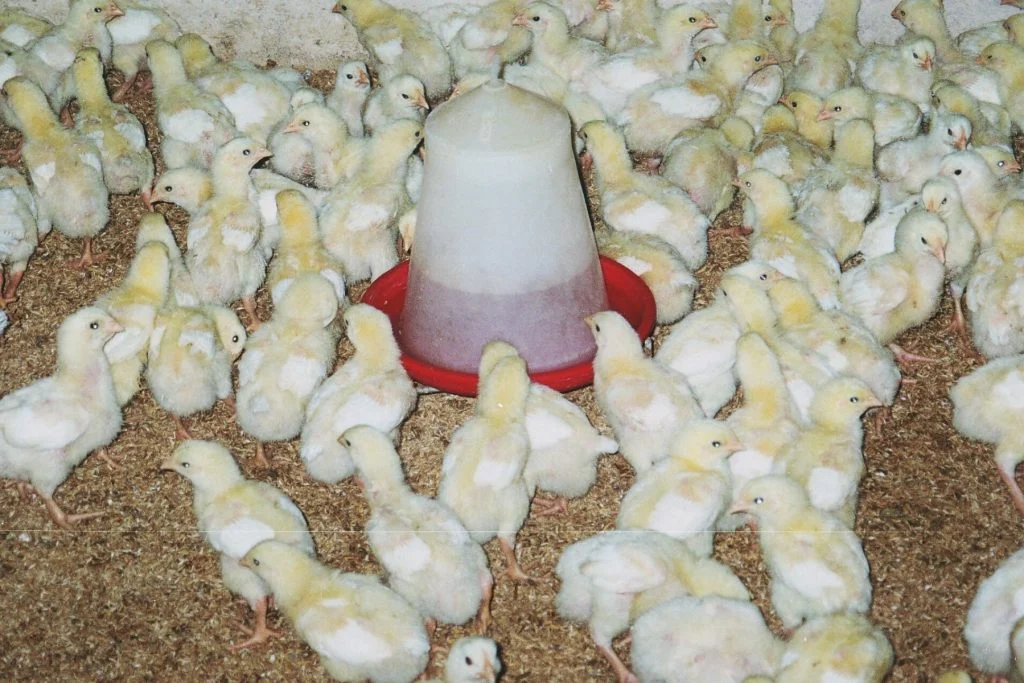
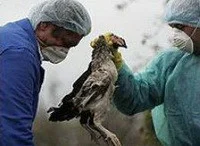
The following images illustrate poultry production and microbiological concepts. The microorganism graphics are illustrative and should not be presented as evidence that a particular farm procedure eliminates every virus or bacterium.
Potential Operational Objectives
When the complete process is properly designed, authorised and validated, on-site generation may support the following operational objectives without guaranteeing a particular change in mortality, growth, medication use or profitability:- More consistent control of suitable poultry drinking-water systems
- Automated generation and metered dosing close to the point of use
- Integration with drinking lines, storage tanks, cleaning loops and spraying equipment
- Reduced dependence on deliveries and storage of concentrated disinfectant products
- Documented monitoring of generated-solution and dosing parameters
- Standardised between-flock cleaning and disinfection procedures
- Improved traceability through operating, maintenance and verification records
- Scalable configurations for individual houses or larger farm complexes
System Validation and Routine Monitoring
Scroll horizontally to view the complete table.
| Parameter | Why it matters | What should be recorded |
|---|---|---|
| Bird and production type | Broilers, layers, breeders and hatcheries have different water demand, hygiene processes and operating schedules. | Bird type, age, flock size, production stage, house occupancy and all-in/all-out schedule. |
| Incoming water | Water chemistry and contamination influence generator operation and disinfectant demand. | Source, hardness, pH, conductivity, turbidity, temperature and microbiological analysis. |
| Generated anolyte | Solution performance depends on its actual characteristics at the point of use. | Free available chlorine, pH, temperature, production time and solution age where storage is used. |
| Water consumption | Peak consumption can be substantially higher than average demand. | Minimum, average and maximum flow by poultry house, bird age and seasonal conditions. |
| Dosing and residual | Under-dosing may reduce control, while excessive dosing may create animal-welfare, compatibility or regulatory concerns. | Pump calibration, dosing rate, flow signal, residual at representative drinkers and alarm limits. |
| Pre-cleaning | Litter, manure, feathers, feed and dust can interfere with surface disinfection. | Dry-cleaning, washing, detergent, rinse, inspection and acceptance criteria before disinfectant application. |
| Contact time | The solution must remain under the validated conditions for the required period. | Minimum wet contact time, start and completion time, drying and re-entry conditions. |
| Materials compatibility | Poultry farms contain galvanised steel, stainless steel, plastics, seals, concrete, coatings and electronic equipment. | Materials inventory, inspection schedule, corrosion observations and corrective action. |
| Microbiological verification | Performance should be measured rather than inferred from generator operation alone. | Sampling points, test organisms or indicators, laboratory method, acceptance limits and retesting procedure. |
| Flock and production records | Operational outcomes can only be evaluated using consistent records. | Water consumption, mortality, medication, feed conversion, flock weight and other farm indicators without attributing causation prematurely. |
Testing and Regulatory Context
Envirolyte publishes microbiological testing information covering bactericidal, yeasticidal and virucidal activity under defined laboratory conditions. The results depend on active concentration, pH, temperature, organic load, contact time, organism and test method and cannot be treated as a universal poultry-farm performance guarantee.
Potential European applications may fall under PT3 Veterinary hygiene, PT4 Food and feed area or PT5 Drinking water. Article 95 supplier status and laboratory efficacy information do not by themselves authorise every generated solution, poultry application or marketing claim in every country.
Review the by-products testing information where the generated solution will be used in drinking-water systems, and check the organic status information before making claims concerning organic poultry production.
Selecting an Envirolyte Poultry Farm System
- Country of installation and applicable veterinary, biocidal, drinking-water and environmental requirements
- Bird type, flock size, age range and production cycle
- Number and size of poultry houses
- Minimum, average and peak water consumption
- Source-water analysis and existing water-treatment equipment
- Header tanks, pipe diameters, line lengths and drinker configuration
- Current waterline cleaning and between-flock sanitation procedures
- Required application areas and operating schedule
- Target generated-solution parameters and permitted drinking-water residual
- Existing storage tanks, dosing pumps and control signals
- Required redundancy and solution-storage capacity
- Sampling, alarms, remote monitoring and record-keeping requirements
- Available electrical supply, drainage and installation space
Projects may be evaluated using equipment from the ELA anolyte generator range or the ANW anolyte generator range. Final model selection depends on required output, water quality, solution parameters, operating hours, storage strategy and application method.
Frequently Asked Questions
No. Anolyte treatment does not by itself guarantee elimination or prevention of avian influenza. Laboratory virucidal evidence and an authorised disinfection procedure may support specific biosecurity measures, while outbreak prevention and control require official veterinary measures and a complete farm biosecurity programme.
No. Medication and vaccination decisions must be made by a veterinarian. Water and environmental hygiene may support disease-risk management but cannot guarantee that treatment will never be required.
Not as a general procedure. Organic material should be removed and the surfaces cleaned before disinfection because contamination can prevent adequate contact with the underlying surface.
No. Each application has different efficacy, exposure, contact-time, compatibility and regulatory requirements.
Only where the exact product, concentration and application procedure are authorised and supported by an animal-welfare and occupational-exposure assessment. Presence of birds must not be assumed to be acceptable.
No. Such outcomes depend on genetics, feed, climate, stocking density, vaccination, veterinary management, water, housing and many other variables. Any project claim should be based on documented farm data.
No. Permitted use depends on the applicable organic standard, country, application, concentration, product-contact conditions and written confirmation from the relevant certification body.
Discuss a Poultry Farm Water and Biosecurity Project
Provide the Envirolyte technical team with the bird type, flock size, poultry-house layout, water analysis, water consumption, current hygiene programme, intended applications and applicable regulatory requirements.