Supported by Enterprise Estonia Development program

HomeOn-Site Disinfection Applications for Water Treatment and Process HygieneDairy Farm Water Treatment and Hygiene with On-Site Anolyte

Dairy Farm Water Treatment and Hygiene with On-Site Anolyte

Envirolyte dairy farm water treatment and hygiene systems generate anolyte on site for controlled use in animal drinking-water systems, calf and cattle housing, milking areas, selected equipment-sanitation processes and other farm biosecurity applications.

Anolyte is produced from conditioned water, sodium chloride and electricity and contains free available chlorine species, including hypochlorous acid under suitable operating conditions. Concentration, pH, application volume, contact time and monitoring must be selected for each dairy process and validated under actual farm conditions.

Envirolyte equipment should support, not replace, physical cleaning, veterinary oversight, milking hygiene, water testing and farm biosecurity. Learn about electrochemical activation technology, review the broader farming and livestock applications, and check the applicable ECHA and BPR information.

Integrated Hygiene for Dairy Farms

A dairy hygiene programme should address source water, storage tanks, drinkers, distribution lines, calf housing, milking areas, milk-contact equipment, tools, vehicles, feed-handling areas and procedures for preventing cross-contamination. Disinfection should follow effective removal of manure, milk residues, feed, bedding, soil, grease and other visible contamination. Cleaning, descaling and disinfection are separate operations and should not be combined into one general claim unless the complete procedure has been tested and validated.
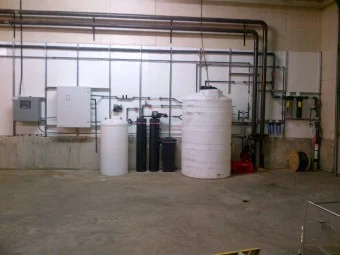
Envirolyte generator installation with solution tanks and water-treatment equipment at a dairy farm in Canada
Envirolyte installation at a dairy farm in Canada.

Potential Dairy Farm Applications

The following application areas should be evaluated separately because water treatment, environmental disinfection, food-contact sanitation and direct animal hygiene have different technical and regulatory requirements.

Scroll horizontally to view the complete table.

Potential uses of on-site generated anolyte in dairy farm water and hygiene programmes
Application area Potential role Important requirements
Animal drinking water Controlled treatment of suitable source water, tanks, distribution pipes, troughs and drinkers. Water analysis, herd demand, peak flow, system condition, dosing method, target residual, materials compatibility and routine verification.
Calf and cattle housing Disinfection of compatible floors, walls, pens, stalls, gates and other cleaned environmental surfaces. Removal of manure and bedding, complete surface coverage, validated concentration, wet contact time, drying, ventilation and animal re-entry procedure.
Milking parlour surfaces Sanitation of compatible external surfaces, floors, walls, gates and selected non-product-contact equipment. Physical cleaning, removal of milk and organic residues, application control, slip-risk management, corrosion review and protection against recontamination.
Milk-contact equipment and pipelines Use as part of an approved cleaning and sanitation process for suitable tanks, pipelines and milking equipment. Food-contact approval, equipment-manufacturer instructions, soil removal, detergent or alkaline washing stage, flow, temperature, contact time, rinsing requirements and verification.
Cleaning-in-place systems On-site generation of anolyte for disinfection and, where suitable equipment is selected, catholyte for alkaline washing support. Validated CIP sequence, milk-soil characteristics, turbulence, flow velocity, temperature, concentration, materials compatibility and final rinse requirements. See CIP solutions for processing equipment.
Teat and udder hygiene Only a specifically authorised formulation and procedure may be evaluated for pre-milking or post-milking hygiene. Veterinary or biocidal authorisation, skin compatibility, approved concentration, application method, contact time, residue requirements and milk-quality monitoring.
Tools, boots and vehicles Sanitation of cleaned tools, footwear, movable equipment and selected vehicle surfaces. Separation of clean and dirty areas, soil removal, suitable application equipment, contact time and prevention of solution dilution or contamination.
Feed handling and storage areas Hygiene support for compatible conveyors, bins, storage zones and cleaned feed-processing equipment. Feed-safety requirements, moisture control, water activity, application volume and protection against post-treatment contamination. See feed material decontamination.
Green fodder and silage Project-specific evaluation as part of a controlled preservation or hygiene-support process. Crop type, dry matter, dosage, solution distribution, fermentation, storage conditions and feed analysis. See green fodder and silage preservation.

How an Envirolyte Dairy Farm System Works

A complete installation may combine an Envirolyte generator with incoming-water treatment, brine preparation, solution storage, dosing pumps, spray equipment, circulation loops, flow monitoring and automated controls.
  1. Application assessment: define whether the project concerns drinking water, housing, the milking parlour, milk-contact equipment, CIP or another approved use.
  2. Water analysis: evaluate hardness, pH, conductivity, turbidity, organic demand and microbiological quality.
  3. Water preparation: provide filtration, pressure regulation or softening where required by the selected generator.
  4. Brine preparation: prepare sodium chloride solution according to the equipment specification.
  5. On-site generation: produce anolyte under controlled electrical, hydraulic and solution-quality conditions.
  6. Storage or direct supply: transfer the solution to a compatible storage tank or directly to the approved dosing system.
  7. Controlled application: meter, circulate or spray the solution at the validated concentration and application rate.
  8. Monitoring: measure the generated solution, dosing rate, water residual or other defined critical parameters.
  9. Verification: document operating data and confirm results through inspection, water testing, surface testing or microbiological sampling where required.

Animal Drinking-Water Treatment

Generator capacity should be selected using minimum, average and peak water demand rather than herd size alone. Storage volume, long distribution lines, drinker condition, biofilm, organic demand and seasonal water-quality changes can affect the required production and dosing capacity. A treatment programme should define the injection point, mixing, target residual, representative sampling points, alarm limits and response to deviations. Direct solution concentration at the generator must not be confused with the permitted residual in animal drinking water.

Milking Parlour and Housing Hygiene

Applying disinfectant over dirty surfaces is not a substitute for cleaning. The farm procedure should define dry removal of contamination, washing, detergent use where needed, rinsing, inspection, disinfection, wet contact time, drying and protection against recontamination. Repeated exposure should be assessed for stainless steel, galvanised metal, concrete, coatings, plastics, rubber seals, electronic equipment and other materials present at the site.

Milk-Contact Equipment and CIP

Milk fat, protein, mineral deposits and microbial contamination may require different cleaning stages. Anolyte should not be presented as a universal replacement for alkaline detergent, acid descaling or mechanical cleaning. Where both alkaline washing and oxidising disinfection are required, a project may be evaluated with dedicated CIP equipment or another suitable Envirolyte configuration. The cleaning sequence must follow food-safety rules, equipment instructions and the validated plant procedure.

Direct Animal Hygiene

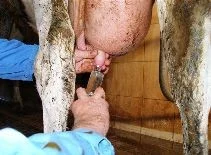
The photograph below illustrates a teat or udder hygiene procedure. It must not be interpreted as a general authorisation for direct animal application.

Dairy Farm Project Images

Potential Operational Benefits

When the system and operating procedure are correctly designed and validated, on-site generation may offer practical benefits without guaranteeing a specific change in animal health, milk yield or farm profit.
  • Generation of active solution close to the point of use
  • Reduced dependence on deliveries of concentrated disinfectant products
  • Automated production and dosing
  • Integration with drinking-water, spraying or CIP equipment
  • Consistent monitoring of generated-solution parameters
  • Scalable configurations for smaller and larger dairy operations
  • Potential reduction in chemical handling, water use, energy use or downtime where demonstrated by the validated process
Cost, milk-quality, odour, corrosion, water-consumption and productivity claims should be based on measurements from the relevant installation rather than presented as universal outcomes.

Validation and Routine Monitoring

Scroll horizontally to view the complete table.

Parameters to document when validating a dairy farm anolyte system
Parameter Why it matters What should be recorded
Incoming water Water chemistry affects generator operation, dosing demand and solution properties. Source, hardness, pH, conductivity, turbidity, temperature and microbiological results.
Generated anolyte Performance and compatibility depend on the actual solution at the point of use. Free available chlorine, pH, temperature, production time and solution age where storage is used.
Application rate Under-dosing may reduce performance, while excessive dosing may create compatibility or residue concerns. Pump calibration, flow signal, litres per hour, application volume and relevant residual.
Pre-cleaning Milk, manure, bedding and other organic matter can interfere with disinfection. Cleaning stages, detergents, rinsing, inspection and acceptance criteria before disinfection.
Contact time The treated surface or water must remain under the validated conditions for the required period. Minimum wet contact time, process interruptions and completion procedure.
Materials compatibility Farm and milking systems contain different metals, plastics, seals and coatings. Materials list, inspection frequency, corrosion observations and corrective actions.
Microbiological verification Performance must be measured rather than assumed from generator operation. Sampling points, organisms or indicators, laboratory method, limits and retest procedure.
Milk and food safety Milk-contact processes may be subject to residue, rinse and food-contact requirements. Approved procedure, final rinse where required, inspection records and relevant milk-quality results.

Testing, Regulatory and Organic Context

Envirolyte publishes microbiological testing information for anolyte. Laboratory results apply to the tested concentration, temperature, organic load, contact time, target organism and test method and should not be converted into an unconditional dairy-farm performance guarantee.

In the European regulatory context, potential applications may fall under PT3 Veterinary hygiene, PT4 Food and feed area or PT5 Drinking water. Article 95 supplier status does not by itself authorise every generated solution, claim or application in every country.

Anolyte should also not be described simply as an “organic disinfectant”. The organic status information explains that electrolysed water may be permitted for selected cleaning, sanitising or disinfection uses subject to the applicable organic standard, concentration, contact situation, rinse requirements and approval of the certification body.

Selecting an Envirolyte Dairy Farm System

  • Country of installation and applicable veterinary, biocidal, food-safety and drinking-water rules
  • Herd size, animal groups and housing arrangement
  • Minimum, average and peak water consumption
  • Incoming-water analysis and existing water-treatment equipment
  • Current drinking-water, housing and milking hygiene procedures
  • Milking parlour and milk-line equipment models and materials
  • Required application areas and operating schedule
  • Target solution concentration, pH and application volume
  • Existing tanks, pumps, pipework and automation
  • Required generator redundancy and solution-storage capacity
  • Monitoring, alarms, sampling and record-keeping requirements
  • Available electrical supply, drainage and installation space

Projects can be evaluated using equipment from the ELA anolyte generator range or the ANW anolyte generator range. Selection depends on required output, solution properties, operating hours, salt consumption, storage strategy and application method.

Frequently Asked Questions

Can anolyte treat mastitis or other cattle diseases?
This page should not make a veterinary-treatment claim. Disease diagnosis and treatment require a veterinarian and an authorised veterinary medicinal product or procedure.
Can anolyte replace cleaning before disinfection?

No. Milk residues, manure, bedding, grease and other visible contamination should be removed before disinfection unless a validated combined cleaning-disinfection procedure specifically states otherwise.

Can one concentration be used for drinking water, floors and milk-contact equipment?

No. Each application has different efficacy, materials-compatibility, residue, contact-time and regulatory requirements.

Can anolyte replace alkaline and acid CIP chemicals?

Not as a universal claim. Milk fat, protein and mineral scale may require separate alkaline washing, acid descaling, mechanical action or temperature control. The complete CIP sequence must be validated for the equipment and soil type.

Is anolyte automatically approved for organic dairy farming?

No. Permitted use depends on the organic standard, country, application, concentration, product-contact conditions and the decision of the farm’s certification body.

Does on-site generation guarantee lower costs or higher milk production?

No. Operating savings and production outcomes depend on the previous process, equipment utilisation, water and energy use, chemical consumption, farm management and measured project results.

Discuss a Dairy Farm Water and Hygiene Project

Provide the Envirolyte technical team with the herd size, water analysis, daily water demand, current hygiene procedures, milking equipment information, intended applications and applicable regulatory requirements.

  • Products
  • Technology
  • Performance
  • Applications