
Envirolyte shrimp farming water treatment systems generate anolyte on site for controlled use in hatcheries, incoming and stored water, pond preparation and selected aquaculture hygiene processes. The objective is to integrate a defined disinfection step into the farm’s existing water-management and biosecurity programme rather than treat anolyte as a stand-alone disease-management method.
Electrochemical activation uses water, salt and electricity to produce anolyte. Depending on system configuration and operating conditions, the solution can contain active chlorine species such as hypochlorous acid and hypochlorite. For sites with suitable feed water, Envirolyte also provides sea water anolyte generators designed to use seawater or brackish water as the feed source.
Application conditions must be validated for the specific water chemistry, salinity, organic load, temperature, flow or exchange rate, treatment objective and regulatory requirements. Required concentration, dosing rate and contact time are project-specific; one dosing ratio should not be carried across shrimp farms without validation.
Where Anolyte Can Fit in a Shrimp Farming Operation
The appropriate treatment point depends on the production stage, farm design and water-management strategy. Potential applications that can be evaluated include:
- controlled treatment of incoming or stored water before use;
- hatchery water hygiene within a defined biosecurity programme;
- pond preparation and treatment of incoming replacement water;
- water-storage tanks and selected aquaculture hygiene procedures;
- selected feed or process-hygiene applications where separately validated and permitted.
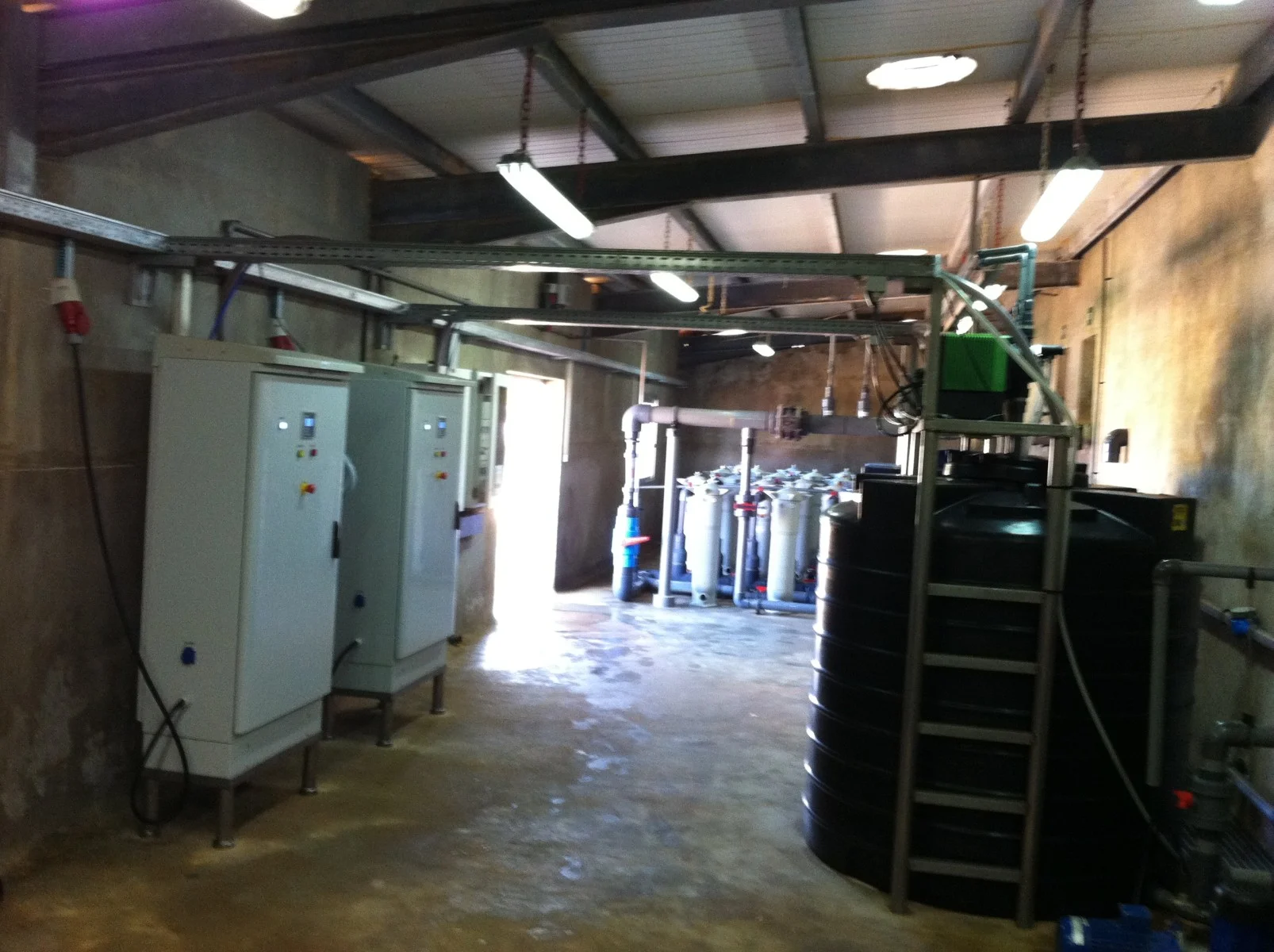
How On-Site Anolyte Generation Works
Envirolyte electrochemical activation systems generate an oxidising anolyte solution close to the point of use. The process is based on electrolysis of a saline feed solution. Depending on the system and operating parameters, the generated anolyte can contain active chlorine species responsible for its disinfecting action.
Anolyte is therefore a chlorine-based oxidising solution and should be treated as a controlled disinfectant rather than described as chlorine-free. The production arrangement, storage, dosing point, monitoring method and contact conditions must be matched to the treatment objective. See the electrochemical activation technology overview for additional technical background.
Project Inputs for Shrimp Farm Water Treatment
Equipment selection and treatment design should start with the farm’s actual water and operating conditions rather than a universal dose or generator size.
Swipe horizontally to view the full table.
| Project factor | Why it matters | Information to provide |
|---|---|---|
| Water source and salinity | Feed-water characteristics affect generator configuration and the overall treatment arrangement. | Identify whether the source is seawater, brackish water or freshwater and provide a representative water analysis. |
| Organic load and suspended material | Organic matter and solids can increase disinfectant demand and affect treatment performance. | Provide relevant turbidity, solids and water-quality information for the intended treatment point. |
| pH and temperature | These conditions influence disinfectant chemistry and the effectiveness of a treatment process. | Provide representative operating ranges rather than a single occasional measurement. |
| Water volume and exchange | Pond or tank volume, intake flow and exchange practices determine the treatment demand and dosing arrangement. | Provide pond and tank volumes, intake flow rates and the normal water-exchange schedule. |
| Treatment objective | Incoming water, hatchery water, pond preparation and other hygiene tasks require different validation and control strategies. | Define the treatment point, operating purpose and how treated water moves through the production process. |
| Biosecurity and regulatory requirements | Disinfection is one part of farm biosecurity, and permitted uses can vary between jurisdictions and applications. | Provide the applicable farm procedures, species and production stage, installation country and relevant regulatory requirements. |
Evidence, Publications and Regulatory Context
Envirolyte publishes microbiological testing information for anolyte as well as ECHA and BPR regulatory references. Test conditions, target microorganisms and regulatory scope should be reviewed for the intended aquaculture application rather than treated as universal shrimp-farm performance data.
Product authorisation, permitted use and documentation requirements can vary by country, product type and application. Farm-specific validation should therefore consider both the technical treatment objective and the requirements that apply at the installation location.
Frequently Asked Questions
Envirolyte anolyte systems can be evaluated for controlled treatment of incoming or stored water, hatchery water, pond preparation and selected hygiene procedures. The treatment point and operating conditions must be defined for the individual farm.
No. Required concentration, dosing rate and contact time depend on water chemistry, salinity, organic load, temperature, pond or tank volume, water exchange, the treatment objective and applicable regulatory requirements.
No. Water disinfection is one part of a biosecurity programme. Stock health, screening, water-quality management, sanitation, feed management, monitoring and disease-response procedures remain necessary.
Selected Envirolyte sea water anolyte systems are designed to use seawater or brackish water as the feed source. Suitability depends on salinity, water quality, required output and the complete treatment design.
Provide the production stage, water source and analysis, salinity, pond or tank volumes, intake and exchange rates, treatment objective, current hygiene and biosecurity procedures, available utilities and local regulatory requirements.
Discuss a Shrimp Farming Water Treatment Project
Share the production stage, water analysis, salinity, pond or tank volumes, intake and exchange rates, intended treatment point and applicable regulatory requirements so the Envirolyte team can evaluate the project conditions.