
Decentralised Drinking Water Treatment for Rural Communities
Remote settlements may not have an economical connection to a central water-treatment plant or municipal distribution network. Local surface water or groundwater may be available, but it must be assessed and treated before it is used as drinking water.
An Envirolyte rural water project can incorporate filtration and anolyte dosing in a compact treatment installation located close to the community. Depending on the project, additional clarification, filtration, pH correction, softening or other pre-treatment may also be required.
Examples of Rural Raw-Water Sources
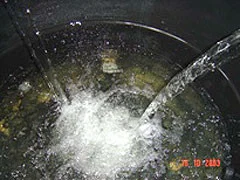
The project photographs show natural streams and small collection structures used as local raw-water sources. The quality and seasonal variability of every source must be established through appropriate physical, chemical and microbiological analysis.
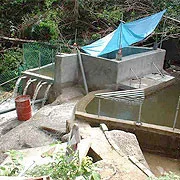
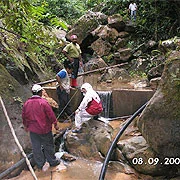
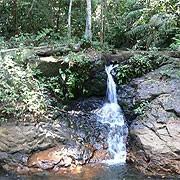
Typical Rural Drinking Water Treatment Process
- Source-water assessment: analyse the raw water, seasonal conditions, flow, microbiological risks and relevant drinking-water requirements.
- Pre-treatment: remove suspended matter and reduce turbidity using sand filtration or another process selected for the source water.
- On-site anolyte generation: generate the active solution from water, sodium chloride and electricity using suitable Envirolyte equipment.
- Controlled dosing and contact: inject anolyte into a flowing line or dose it into a storage tank or reservoir.
- Monitoring and verification: establish operating limits and verify treatment using appropriate residual, ORP, physical, chemical and microbiological measurements.
Sand Filtration and Pre-Treatment
The photographed installation used simple sand filtration before the disinfection stage. Sand filtration can reduce suspended material, but it must not automatically be assumed to provide all the pre-treatment required for every source.
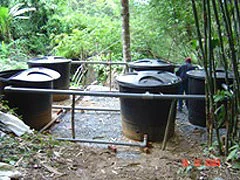
Two Anolyte Dosing Configurations
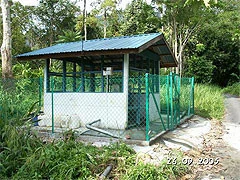
The project examples illustrate two principal configurations: continuous injection into a flowing water line and treatment in a storage reservoir before distribution.
Online Injection Installation
Reservoir Treatment Installation
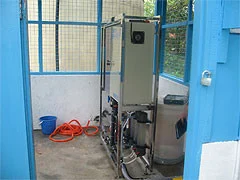
Rural Disinfection Equipment and Monitoring
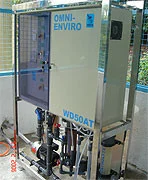
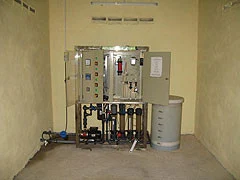
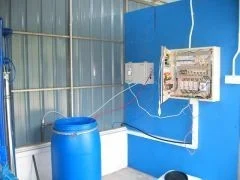
A complete system can include the anolyte generator, water conditioning, a brine tank, solution storage where required, dosing pumps, electrical controls, alarms and process-monitoring equipment. The final component list depends on the selected generator and site requirements.
ORP may be used as one process-control parameter, but it is not a universal substitute for direct disinfectant-residual measurement or microbiological verification. The commissioning plan should define the appropriate monitoring method, sampling points, acceptance criteria and response to abnormal readings.
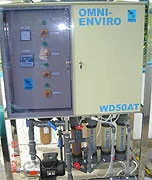
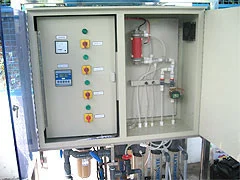
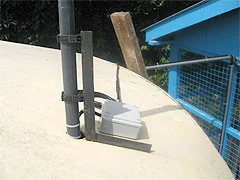
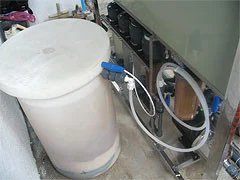
Rural Drinking Water Projects in Malaysia
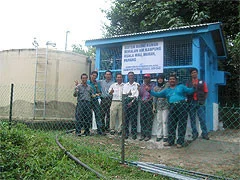
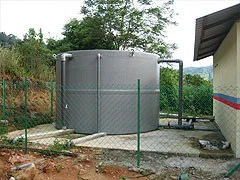
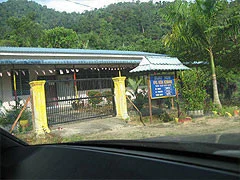
The following photographs document two Envirolyte rural drinking water installations in Malaysia. They document storage, treatment buildings, equipment, controls and site infrastructure. The photographs do not by themselves demonstrate current water quality or regulatory compliance.
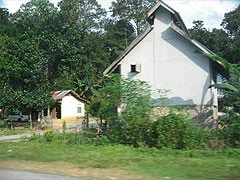
KG Kemangi, Baling, Kedah, Malaysia
The project gallery documents a rural water disinfection installation at KG Kemangi in the Baling area of Kedah.
Kampong Jejok, Fort Brooke, Gua Musang, Kelantan, Malaysia
The second project gallery documents a rural drinking water disinfection installation at Kampong Jejok near Fort Brooke, Gua Musang, Kelantan.
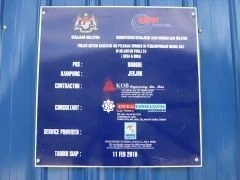
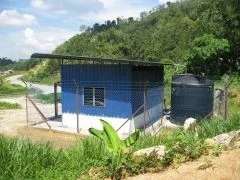
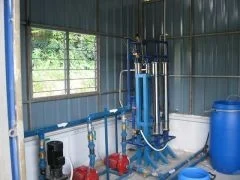
Information Required for System Selection
Generator selection should follow assessment of the complete water-treatment process rather than being based only on village population or nominal water flow.
- Project country, community location and applicable drinking-water regulations
- Population served and current and projected water demand
- Minimum, average and peak hourly flow
- Source type and seasonal source-water analysis
- Turbidity, pH, temperature, organic load and microbial indicators
- Existing filtration, tanks, pumps and distribution infrastructure
- Required contact time and target disinfectant residual
- Available electrical supply, salt supply and installation space
- Required redundancy, storage capacity and operator attendance
- Sampling, monitoring, alarm and reporting requirements
Relevant supporting information is available in the sections covering microbiological testing of anolyte and disinfection by-products testing. Test results must be interpreted according to the tested concentration, contact time, water conditions and intended application.