Hypochlorous Acid, Anolyte and Catholyte Generation Systems
Envirolyte manufactures anolyte generators and electrochemical systems for the on-site production of hypochlorous acid-rich anolyte and alkaline catholyte. The product range includes ELA, ANW and HD anolyte generators, CG catholyte systems, seawater generators and specialised equipment for water treatment, process hygiene and industrial applications.
The correct system depends on the required generated solution, production capacity, free available chlorine concentration, pH, water or brine quality, dosing method, useful catholyte requirement and installation conditions.
Envirolyte equipment can operate as part of a complete treatment installation with solution storage, dosing, monitoring and process controls selected for the specific project.
Envirolyte Anolyte and Catholyte Generator Families

ELA Anolyte Generators

ANW Anolyte Generators

HD Anolyte Generators

CG Catholyte Generators

Sea Water Anolyte Generators

Industrial Water Ionizers

CIP Equipment

CIP HD Equipment

Modular Unit

GH-40

DesiStation-120

Demonstration Unit
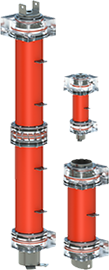
Electrolysis Cells
Which Envirolyte Generator Should You Evaluate?
The table below provides a starting point for product selection. Final equipment sizing and configuration should be based on the actual water analysis, process requirements, required solution parameters and installation conditions.
| Project requirement | Product family to evaluate | Selection logic |
|---|---|---|
| General on-site anolyte generation | ELA | Suitable starting point for water disinfection, sanitation and process-hygiene projects, including applications where a useful catholyte stream may also be required. |
| Neutral anolyte with reduced salt and chloride residue | ANW | Designed for low-salt HOCl-rich anolyte generation where commercially useful catholyte production is not required. |
| High-FAC anolyte | HD | Designed for concentrated anolyte production in the approximate 1,000–6,000 ppm FAC range, depending on configuration. |
| Alkaline catholyte as the main product | CG | Dedicated catholyte production for suitable washing, alkaline cleaning and process-support applications. |
| Low-salt cleaning-in-place with anolyte and catholyte | CIP | Designed for processes requiring both an oxidizing disinfection solution and an alkaline washing solution with defined CIP parameters. |
| Stronger anolyte and catholyte for washing and disinfection | CIP HD | Evaluated when standard CIP solution parameters are not sufficient for the required washing, degreasing or disinfection process. |
| Seawater or brackish water available as feed | Sea Water | Designed for suitable maritime, offshore, aquaculture and coastal installations where seawater can provide the chloride feed source. |
| High active-chlorine demand with modular expansion | Modular HD | Designed for larger installations requiring high-output production and the possibility of adding generation capacity through modular configurations. |
| Compact generation from premixed brine | GH-40 | Compact option for generating neutral anolyte alone or anolyte and catholyte where premixed brine operation is suitable. |
Features of Envirolyte Generation Systems
Envirolyte equipment is designed for automated on-site generation of electrochemically activated solutions. Available controls, monitoring functions and generated-solution parameters depend on the selected product family, model and project configuration.
- Automated generation of anolyte, catholyte or both solution streams, depending on the product family.
- Current stabilisation to support consistent generated-solution parameters during operation.
- Automatic self-cleaning functions to support routine system maintenance.
- Integrated control of operating parameters such as solution flow, brine feed and generator status, depending on model and configuration.
- Flow, pressure, temperature, tank-level and other monitoring options where required by the selected system.
- Optional pH regulation and remote communication or monitoring on supported configurations.
- Wetted components selected for compatibility with the generated solutions and intended operating conditions.
- Installation as a stand-alone generator or as part of a complete treatment system with storage, dosing, monitoring and process controls.
Exact control functions, materials, optional equipment and automation features should be confirmed for the selected generator and project specification.
Comparison of ELA generators:
Compare the general output ranges, generated-solution parameters, integrated controls and optional features of Envirolyte ELA, ANW and HD anolyte generator families. Exact specifications depend on the selected model, configuration, source-water quality and project requirements.
Scroll horizontally to view all generator specifications.
| Feature or specification | ELA generators | ANW generators | HD generators |
|---|---|---|---|
| FAC concentration in anolyte | Up to 500 ppm | Up to 500 ppm | 1,000–6,000 ppm |
| Anolyte output | 20–3,000 L/h | 20–6,000 L/h | 20–3,000 L/h |
| Catholyte output as a percentage of total flow | 0–60% | Approximately 0.4% | Approximately 0.4% |
| Catholyte pH | Approximately 10–12.2 | Approximately 12.5–13.5 | Approximately 12.5–13.5 |
| NaOH concentration in catholyte | Approximately 500–1,000 ppm | Approximately 30,000–80,000 ppm | Approximately 30,000–150,000 ppm |
| Current stabilisation | Included | Included | Included |
| Salt consumption, g NaCl/g HClO | Up to 10 | Up to 3 | Up to 3 |
| Input valve | Included | Included | Included |
| Flow sensor | Included | Included | Included |
| Pressure sensor | Included | Included | Included |
| Brine pump | Included | Included | Included |
| Optional anolyte pH regulation | Approximately pH 2.5–8.5 | Approximately pH 2.5–7.5 | Approximately pH 5.5–7.5 |
| Optional increase of anolyte pH | Not available | Available | Available |
| Optional automated pH regulation and control | Available | Available | Available |
| Acid pump for cell flushing | Included | Included | Included |
| Cell temperature monitoring | Included | Included | Included |
| Brine quality control | Included | Included | Included |
| Level switch for anolyte tank | Included | Included | Included |
| PLC | Included | Included | Included |
| Optional remote control | Available | Available | Available |
Specification note: This table provides a general comparison of generator families rather than a specification for every model. Output, FAC concentration, catholyte production, pH range, controls and optional equipment must be confirmed for the selected generator and project configuration.
ELA generators provide standard on-site anolyte generation with a useful catholyte stream available depending on system configuration. ANW generators are designed for low-salt, neutral HOCl-rich anolyte production where a commercially useful catholyte stream is not required. HD generators are designed for higher-FAC anolyte production, typically within the approximate 1,000–6,000 ppm FAC range depending on the selected model and configuration.
Operational Advantages of On-Site Generation
- Generation of treatment solutions at the point of use from water, a suitable chloride-containing feed and electricity.
- Reduced dependence on the transport and storage of ready-to-use treatment solutions where on-site generation is suitable.
- Product families for standard anolyte, low-salt anolyte, higher-FAC anolyte, catholyte, CIP and specialised applications.
- Multiple production capacities and solution configurations for different treatment demands.
- Automated operation and monitoring options for integration into continuous or batch processes.
- System configurations that can be integrated with solution tanks, dosing equipment and existing process controls.
Anolyte is the oxidizing solution produced in the anode stream and can contain hypochlorous acid as an important free available chlorine species under suitable pH conditions. It can support microbial control in suitable water-disinfection and process-hygiene applications when concentration, contact time, dosing and other treatment conditions are established for the specific process.
Catholyte is the alkaline stream produced in the cathode chamber. Depending on the selected Envirolyte system, it can be evaluated for suitable washing, alkaline cleaning, pH adjustment and selected process-support applications.
Generator selection should be based on the required solution parameters, production capacity, source-water or feed-water quality, dosing conditions, process integration, material compatibility, monitoring requirements and applicable regulations.
How Envirolyte Generation Systems Work
Envirolyte anolyte and catholyte generators use electrochemical activation to convert a saline feed solution into activated liquid streams. In diaphragmatic systems, the electrolysis cell separates the anode and cathode chambers so that oxidizing anolyte and alkaline catholyte can be produced with controlled characteristics.
In the anode stream, electrochemical reactions produce free available chlorine species. Under suitable pH conditions, hypochlorous acid is an important component of the generated anolyte. The cathode stream is alkaline and can provide catholyte for suitable washing, cleaning and process-support functions.
Different Envirolyte generator families use this process in configurations designed around different solution concentrations, flow rates, feed sources and application requirements. For technical background, see electrochemical activation technology.
Controls and System Integration
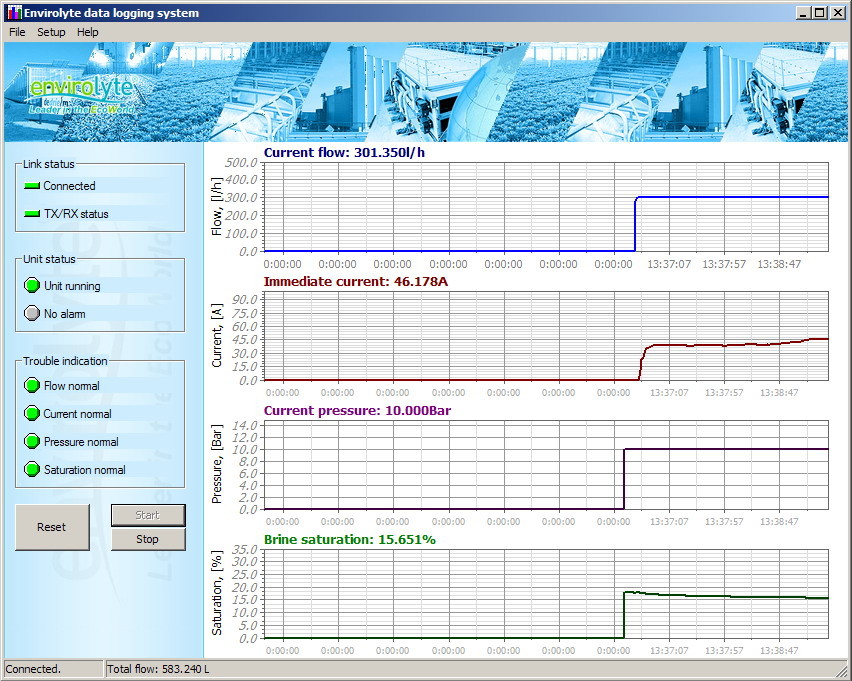
Control and automation features depend on the selected product family and configuration. Project-specific systems may include flow and pressure monitoring, tank-level control, brine dosing, cell-temperature monitoring, pH control, ORP or FAC monitoring, PLC control and remote communication options.
A complete installation may also require solution tanks, dosing pumps, injection points, ventilation, electrical protection, process interlocks and integration with the existing water-treatment, cleaning or production system.
System design should therefore be evaluated as a complete treatment process rather than by generator output alone.
Information Required for Generator Selection
| Project information | Why it matters |
|---|---|
| Intended application | Defines whether the main requirement is water disinfection, sanitation, CIP, alkaline washing, maritime treatment or another process. |
| Required generated solution | Determines whether the project requires anolyte, catholyte or both solutions. |
| Required FAC or NaOH concentration | Helps distinguish between standard anolyte, low-salt ANW, high-FAC HD, catholyte and CIP configurations. |
| Daily solution demand and required flow rate | Determines generator capacity, operating schedule and storage requirements. |
| Source water or feed-water analysis | Water quality and salinity can affect generator selection, operating parameters and treatment design. |
| Required pH | Some generator families and configurations provide different pH ranges or optional pH control. |
| Dosing and contact conditions | Dosing point, treatment flow, contact time and target residual influence the complete system configuration. |
| Existing process equipment | Tanks, pumps, pipework, control systems and available installation space affect integration requirements. |
| Regulatory requirements | Permitted uses, solution specifications, monitoring and validation requirements depend on the application and jurisdiction. |
Applications for Envirolyte Equipment
Envirolyte equipment is used in projects involving drinking and process water, food and beverage hygiene, agriculture, cooling systems, wastewater, maritime installations, hospitality, healthcare-related water hygiene and industrial processes.
Application requirements differ significantly. Treatment concentration, contact time, dosing strategy, material compatibility, monitoring and regulatory conditions should be established for the specific installation rather than transferred from an unrelated application.
See Envirolyte applications for application-specific design considerations and examples.
Testing, Performance and Compliance
Equipment selection should be considered together with evidence relevant to the intended application. Envirolyte provides information covering microbiological testing, solution characteristics, by-product testing, application-specific performance and regulatory or compliance considerations.
- Performance and testing information
- Microbiological testing
- By-products testing
- Approvals and compliance information
Performance data should be interpreted according to the applicable test conditions, generated-solution specification and intended use. Regulatory requirements should be confirmed for the relevant application and jurisdiction.
Frequently Asked Questions
What is the difference between ELA and ANW generators?
ELA and ANW are both Envirolyte systems for on-site anolyte generation, but they are designed around different solution requirements. ELA generators are the standard choice where HOCl-rich anolyte is required and a useful catholyte stream may also be needed, depending on configuration. ANW generators are designed for low-salt, neutral HOCl-rich anolyte production with reduced chloride residue and only a small catholyte side stream. Selection should be based on required flow, FAC concentration, pH, salt consumption, catholyte demand, source-water quality and project conditions.
What is a hypochlorous acid generator?
A hypochlorous acid generator produces an oxidizing solution on site by electrolysis of water and a chloride-containing feed. In Envirolyte systems, the generated anolyte can be rich in hypochlorous acid under suitable pH conditions. The actual FAC concentration, pH and solution composition depend on the generator family, configuration, feed-water quality and operating conditions.
What is an electrochlorination system?
An electrochlorination system uses an electrical current to generate active chlorine species from a chloride-containing solution. Envirolyte systems use electrochemical cells to produce anolyte for water disinfection and process-hygiene applications, with the generated solution characteristics determined by the selected equipment and operating conditions.
What is anolyte used for?
Anolyte can be evaluated for drinking and process water disinfection, food-processing hygiene, agricultural and livestock water treatment, cooling systems, wastewater treatment, surface sanitation and biofilm-control programmes. Required concentration, contact time, dosing, monitoring and validation should be established for the specific application.
What industries use electrolyzed water generators?
Electrolyzed water generators are used in projects involving drinking and process water, food and beverage production, agriculture, livestock farming, aquaculture, healthcare-related water hygiene, hospitality, cooling systems, wastewater treatment and industrial sanitation. Equipment selection and treatment conditions vary by application and regulatory context.
Can Envirolyte systems be used for drinking water disinfection?
Envirolyte systems can be evaluated for drinking water disinfection projects where the generated solution, dosing method, monitoring strategy and equipment configuration meet the applicable water-quality and regulatory requirements. Final design should be based on source-water analysis, treatment flow, target residual, contact conditions and local regulations.
What is the difference between anolyte and sodium hypochlorite?
Sodium hypochlorite is normally supplied as a chlorine-based chemical solution, while anolyte is generated on site by electrolysis of water and salt or another suitable chloride-containing feed. Anolyte can contain hypochlorous acid as an important free-chlorine species under suitable pH conditions. The two should be compared for the specific application using parameters such as FAC concentration, pH, dosing, storage, by-products, material compatibility and regulatory requirements.
Select an Envirolyte Generator for Your Project
Provide the intended application, source-water information, required solution parameters, production capacity and installation conditions so that the appropriate Envirolyte product family and system configuration can be evaluated.