Supported by Enterprise Estonia Development program

HomePerformance, Testing and Compliance EvidenceBy-products Testing

By-products Testing

This page summarises independent by-products testing of Envirolyte anolyte, with a focus on chlorite (ClO2) and chlorate (ClO3), two inorganic disinfection by-products that may be relevant in water disinfection and oxidant-generation processes.

The testing was undertaken by the Institute of Chemistry of Tallinn Technical University, Estonia. The aim of the study was to check whether chlorite and chlorate could be detected in freshly generated anolyte under the stated ion chromatography conditions.

The results should be interpreted according to the tested anolyte type, dilution, analytical method, method detection limit and actual application conditions. Envirolyte provides this information for technical and regulatory reference only.

Why Chlorite and Chlorate Testing Matters

Chlorite and chlorate are monitored because they can occur as disinfection by-products in certain water treatment processes. Their presence may depend on the oxidant chemistry, pH, storage conditions, water quality, contact time and system design.

For customers using on-site generated anolyte in drinking water, process water, agriculture, livestock, food processing or industrial hygiene applications, by-products testing can support technical evaluation, tender documentation and regulatory discussions.

For related performance data, see Microbiological Testing, Acute Toxicity and Chronic Toxicity.

Tested Anolyte Types

Two different anolyte regimes were tested. The samples were produced according to instructions provided by Envirolyte Industries International Ltd. and were generated immediately before testing.

Tested Envirolyte anolyte regimes
Anolyte type pH ORP Active chlorine concentration Tested dilutions
Anolyte Medium 2–3 ≥ 1100 mV Approx. 300 mg/L 1:200, 1:100, 1:20
Anolyte Strong 2–3 ≥ 1100 mV Approx. 500 mg/L 1:200, 1:100, 1:20

Analytical Method

Ion chromatography was used to determine chlorate and chlorite. The experiments were carried out using an Ion Chromatograph CVET-3007 with a 6 × 600 mm analytical column filled with HIKS-1 sorbent.

A 2.4 mM Na2CO3 aqueous solution was used as the eluent. The flow rate was 4.5 mL/min, and the operating pressure was 40–50 atm. Sodium chlorate standards with ClO3 ion concentrations of 29.15 mg/L and 7.29 mg/L were used for comparison.

Preliminary runs showed that, under the stated chromatographic conditions, the ClO3 ion could be separated from chloride (Cl) and detected down to approximately 0.5 mg/L.

Chlorate was determined directly in diluted anolyte samples. Chlorite was evaluated after heating diluted anolyte samples at 100 °C for 5 minutes to convert chlorite to chlorate.

Summary of By-products Testing Results

In the tested dilutions of Anolyte Medium and Anolyte Strong, no chromatographic peak responsible for chlorate was observed. Heated samples prepared at the same dilutions also did not show a chlorate peak under the stated test conditions.

Summary of chlorite and chlorate observations
Anolyte type Dilution Direct sample: chlorate Heated sample: chlorite converted to chlorate Reported interpretation
Anolyte Medium 1:200 Not detected Not detected No chlorate peak observed
1:100 Not detected Not detected No chlorate peak observed
1:20 Not detected Not detected No chlorate peak observed
Anolyte Strong 1:200 Not detected Not detected No chlorate peak observed
1:100 Not detected Not detected No chlorate peak observed
1:20 Not detected Not detected No chlorate peak observed

“Not detected” refers to the stated analytical conditions and the reported detection capability of approximately 0.5 mg/L for ClO3-. It should not be interpreted as a universal zero-concentration statement for every installation or water chemistry.

Chromatogram Evidence

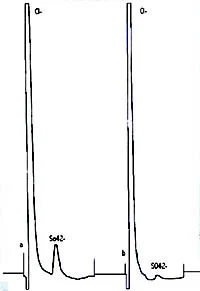
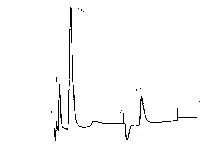
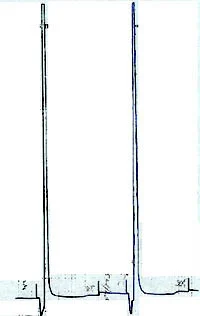
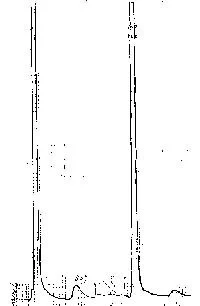
The report includes ion chromatograms for standards and tested anolyte samples. The chromatograms provide visual evidence of the analytical method and complement the summary results presented above.
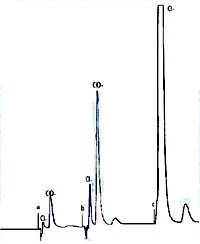
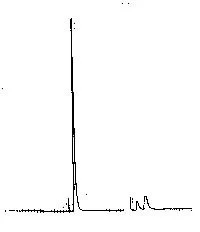
Ion chromatogram standard chlorate concentration 29.15 mg/L and 7.29 mg/L
Chromatogram 1. Chlorate standards used for comparison.
Ion chromatogram of diluted Envirolyte Anolyte Medium sample
Chromatogram 2. Diluted Anolyte Medium sample.
Ion chromatogram of Anolyte Medium sample with sulphate ion added
Chromatogram 3. Anolyte Medium sample with sulphate ion added to verify chromatographic conditions.
Ion chromatogram standard chlorate peak for method comparison
Chromatogram 4. Chlorate standard chromatogram.
Ion chromatogram of Envirolyte Anolyte Strong 1 to 200 dilution
Chromatogram 5. Anolyte Strong sample diluted 1:200.
Ion chromatogram of Envirolyte Anolyte Strong 1 to 20 dilution with sulphate ion added
Chromatogram 6. Anolyte Strong sample diluted 1:20; sulphate ion was added to verify chromatographic conditions.

Customer Interpretation

The reported study indicates that chlorate and chlorite were not detected in the tested freshly generated anolyte samples under the stated ion chromatography conditions.

For real-world projects, by-products formation should be evaluated together with water chemistry, pH, temperature, retention time, storage conditions, active chlorine concentration, dosing rate and local regulatory requirements.

Customers using Envirolyte systems in drinking water, process water, food processing, agriculture, livestock, aquaculture, cooling towers or wastewater applications should confirm whether additional project-specific testing is required.

Related Applications

Frequently Asked Questions

What by-products were tested?

The study focused on chlorite (ClO2) and chlorate (ClO3), two inorganic disinfection by-products that may be relevant in water treatment.

What method was used?

Ion chromatography was used to evaluate chlorate directly and to evaluate chlorite after conversion to chlorate by heating the sample.

Were chlorite and chlorate detected in the tested anolyte?

According to the reported results, chlorate and chlorite were not detected in the tested Anolyte Medium and Anolyte Strong samples under the stated analytical conditions.

Does “not detected” mean zero by-products in every installation?

No. “Not detected” means that no relevant peak was observed under the stated test method and detection capability. Real-world results may depend on water chemistry, concentration, storage, contact time and operating conditions.

Can Envirolyte provide the original test documentation?

Envirolyte can provide available by-products testing information and related technical documentation upon request for project evaluation, tenders or regulatory discussions.

Request By-products Testing Documentation

Envirolyte can support customers, distributors and OEM partners with available by-products testing data, technical documentation and project-specific information for evaluating anolyte systems.

  • Products
  • Technology
  • Performance
  • Applications